TL;DR
This guide lines up the cases where artists took brands to court over graffiti-style work, from clothing to ads, and says what became of each. It is useful because most ended quietly, so there is little court guidance to rely on. Each case has its own section, with its sources.
The short answer: yes, artists have sued brands over graffiti
Yes, graffiti and street artists have sued brands, and the documented cases run from 2014 to 2018. Roberto Cavalli, American Eagle, Moschino and Starbucks were each sued over how they used or imitated street work. H&M went the other way and sued an artist first, then dropped the suit a week later. A separate case, 5Pointz, produced the largest award, $6.75 million, but the defendant there was a landlord, not a brand.
Most of these ended quietly, with a confidential settlement or a dismissal, so courts have said little. That matters, because one question people most want answered, whether brands may reproduce unauthorized murals without permission, was not resolved in the H&M and Moschino cases.
I work in digital marketing in Los Angeles and I paint, so this subject sits where my two worlds meet. This is a guide to what the public record shows, one block per case, with links to the sources and to my longer post on each. It is not legal advice. Where sources disagree, the more cautious wording wins.
The graffiti lawsuits at a glance
| Case | Year | Who sued whom | Court | Outcome (as verified) | Source |
|---|---|---|---|---|---|
| Williams, Chapa and Rubin v. Roberto Cavalli | 2014 | Artists (Revok, Reyes, Steel) sued Cavalli and Just Cavalli sellers | Federal, C.D. Cal., No. 14-cv-06659 | Motion to dismiss denied 12 Feb 2015; artists later moved to dismiss after a confidential settlement | Tushnet, TheFashionLaw |
| Anasagasti v. American Eagle Outfitters | 2014 | Artist Ahol sued the retailer | Federal, New York | Reported settled, terms undisclosed (3 Dec 2014) | Today’s General Counsel |
| Tierney (Rime) v. Moschino and Jeremy Scott | 2015 | Artist sued the label and its creative director | Federal, California | Anti-SLAPP motion denied 13 Jan 2016; reported settled in 2016, terms undisclosed | ABA Journal, FashionUnited |
| Hayuk v. Starbucks and 72andSunny | 2015 | Artist sued the coffee chain and its agency | Federal, S.D.N.Y. | Copyright claim dismissed 12 Jan 2016 | SDNY Blog |
| H&M v. Williams (Revok) | 2018 | H&M sued the artist first | Federal, E.D.N.Y., No. 18-cv-01490 | Filed 9 Mar 2018; voluntarily dismissed 16 Mar 2018; no ruling | Grossman LLP, Hyperallergic |
| Castillo v. G&M Realty (5Pointz) | 2013 to 2020 | 21 artists sued the property owner (not a brand) | Federal, E.D.N.Y.; 2d Cir. No. 18-498 | $6.75 million in 2018; affirmed 20 Feb 2020; Supreme Court denied review 5 Oct 2020 | The Art Newspaper, Manatt, SCOTUSblog |
Cavalli (2014): signatures chopped and rearranged
Three graffiti artists, Jason Williams (Revok), Victor Chapa (Reyes) and Jeffrey Rubin (Steel), sued Roberto Cavalli in August 2014. They said the Just Cavalli line printed images of their San Francisco mural on clothing.
A law blog commentary on the ruling reports that the artists alleged the signatures “Revok” and “Steel” were rearranged until they could not be read, while the mural’s background imagery stayed intact. The claims were copyright infringement, removal of copyright management information, unfair competition and negligence. On 12 February 2015 the federal court in the Central District of California, No. 14-cv-06659, denied a motion to dismiss every claim except copyright infringement. It held that signatures under a pseudonym could count as copyright management information, and let the unfair competition claim go forward as a claim about a false impression of association.
How it ended: about a year and a half after filing, the artists moved to dismiss after a settlement. TheFashionLaw reports the terms were confidential. No amount has been reported, and there was no trial.
What it shows: a brand can be pulled into court for altering a signature, not just for copying a picture. The full story is in my post on Cavalli, Moschino and H&M.
American Eagle (2014): a mural behind a model
David Anasagasti, who works as Ahol, sued American Eagle Outfitters in New York federal court in July 2014 over his “Ocean Grown” work, which appeared in an ad campaign, according to TheFashionLaw. Today’s General Counsel, in an article dated 3 December 2014, reports the parties reached an undisclosed settlement.
What it shows: it is the quickest of the cases, about five months from filing to a reported settlement, and the public record stops there. It is covered with the fashion cases in the Cavalli, Moschino, American Eagle and H&M post.
Moschino (2015): the Katy Perry dress
Joseph Tierney, who paints as Rime, sued Moschino and its creative director Jeremy Scott in 2015. He said parts of his Detroit “Vandal Eyes” mural were used on a gown that Katy Perry wore to an art gala, and that his Rime tag appeared in a related collection, according to the ABA Journal. The claims included copyright and trademark infringement, negligence and California unfair competition.
On 13 January 2016, Judge Stephen Wilson refused to dismiss the case under California’s anti-SLAPP law. He found the fashion line was a matter of public interest, but that Tierney showed a likelihood of winning on the merits. That is an early-stage finding, not a verdict.
Then the case got messy. The Art Newspaper reports that on 19 April 2016 both sides told the court they had a preliminary deal, and that it fell apart in early May. Moschino’s side argued the mural was vandalism and that it made no sense to protect illegal work. Tierney said he had permission as part of a Detroit project to address blight. Moschino’s lawyers wrote, in a passage quoted by TheFashionLaw: “Brazen and willful violations of the law cannot, and, indeed, should not result in the award of copyright privileges.”
How it ended: FashionUnited, citing WWD, reported the case settled, with terms undisclosed, and Tierney is quoted saying he was glad it was settled. The same article says Moschino told the court that not every term was agreed yet. There was no ruling on whether the mural was protected.
What it shows: the vandalism argument was made and never decided. See the Moschino section of the fashion post.
Hayuk v. Starbucks (2015): a style is not enough
Maya Hayuk, a Brooklyn artist, sued Starbucks and the agency 72andSunny in 2015 over a Frappuccino campaign. SDNY Blog reports that she alleged Starbucks copied the “core” of her art after she declined to create material for it.
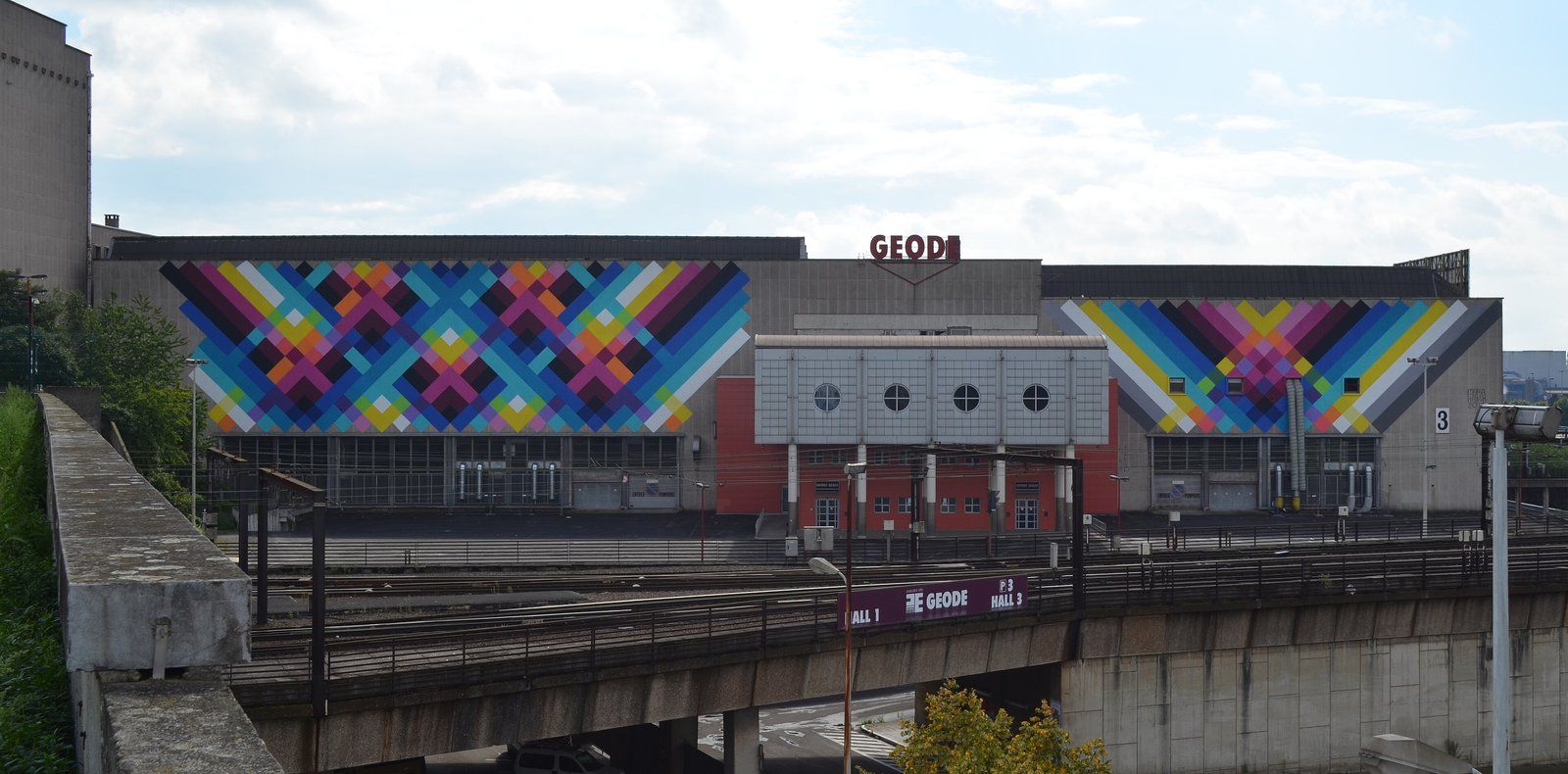

On 12 January 2016, Judge Swain in the Southern District of New York dismissed the copyright claim. According to that report, the court found no precedent treating the appropriation of a work’s “core” as infringement, held that her theory amounted to copying style or ideas, which copyright does not protect, and noted that Starbucks did not make “carbon copies” of her works. Sources print the docket number two ways (14 and 15 Civ. 4887).
What it shows: this is the case where the artist lost, and it is the clearest one on how far a look can be protected. Details are in the Hayuk post.
H&M (2018): the brand that sued first
This one runs backward. Revok, Jason Williams, sent H&M a cease-and-desist letter in January 2018 over a photoshoot in front of his untitled black-line work at William Sheridan Playground in Brooklyn, according to Hyperallergic. On 9 March 2018, H&M filed first, in the Eastern District of New York, No. 18-cv-01490.
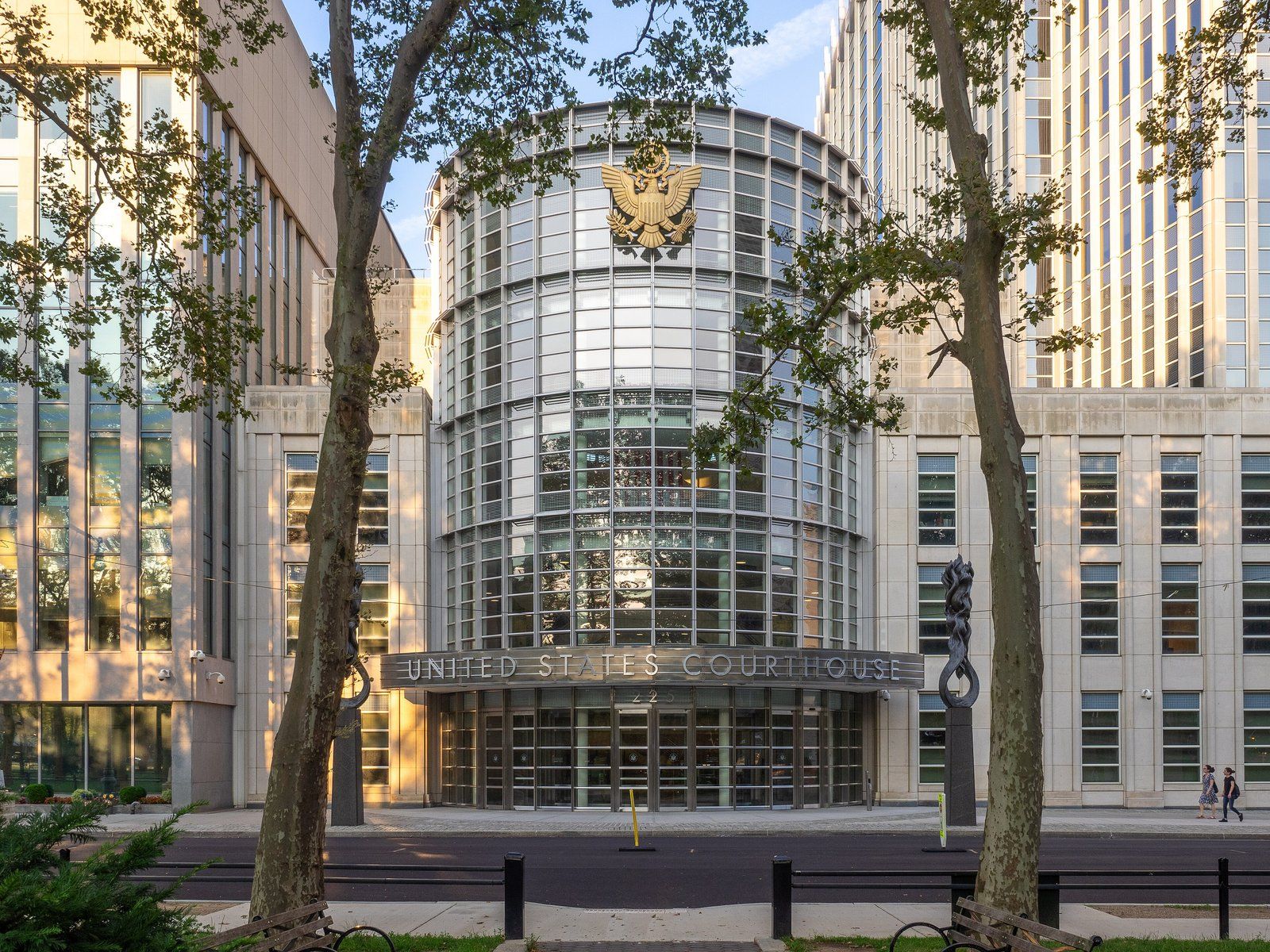

Grossman LLP reports H&M asked the court to declare that Williams had no enforceable copyright in the mural and that H&M’s use did not infringe. H&M’s position, as that firm reports it, was that he had no rights to assert because his graffiti was made through criminal conduct. The city’s Parks Department confirmed the work was unauthorized, according to Hyperallergic.
Then it stopped. H&M said on 15 March, “We should have acted differently in our approach to this matter,” per Hyperallergic. The court record shows a voluntary dismissal on 16 March 2018. Revok’s lawyer first said H&M’s counsel had told him the suit was not being dropped, so the first reports conflicted until the filing appeared. Some commentary calls the matter settled. Neither source gives settlement terms, so the record shows a dismissal and nothing more.
What it shows: the argument that illegal graffiti earns no copyright was put on paper by a large brand and withdrawn within a week, with no court decision. Read the account in the fashion post and the legal basics in Can you copyright graffiti?.
5Pointz: the biggest award, against a landlord
5Pointz is not a brand case, but it is the one everybody cites, because it put a number on destroyed graffiti.
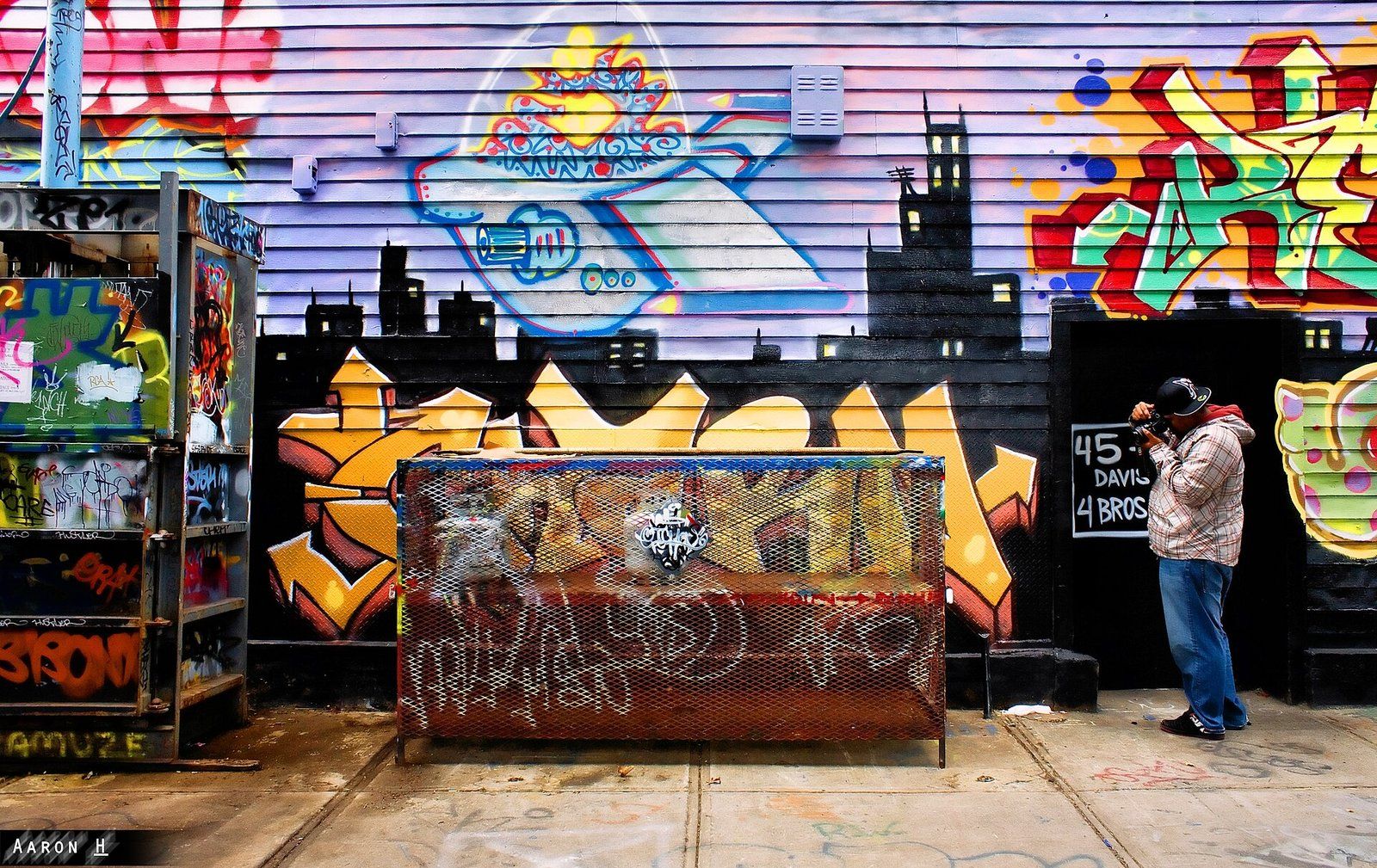

The owner of the 5Pointz warehouse complex in Queens, Gerald Wolkoff, whitewashed the works after a judge denied the artists’ 2013 request for an injunction. On 12 February 2018, Judge Frederic Block awarded $6.75 million to 21 artists, $150,000 for each of 45 works, under the Visual Artists Rights Act. He wrote that the owner’s conduct was “an act of pure pique and revenge”.
The Second Circuit affirmed on 20 February 2020, including the damages, and held that temporary works can reach “recognized stature”. The Supreme Court denied the owner’s petition on 5 October 2020.
What it shows: this is a case about destruction under a specific statute, not about copying in an ad. The detail is in the 5Pointz post.
When the dispute is not a lawsuit: Sony and the rejected ad
Two disputes in this series never reached a courtroom, and they show the other half of the story.
Sony PSP, 2005. Sony hired artists in seven cities to spray-paint pre-drawn black-and-white cartoon figures using its handheld, and the work carried no Sony or PlayStation name, according to an AP story of 30 December 2005. Philadelphia’s managing director faxed Sony a cease-and-desist letter, and an anti-blight group said Sony was breaking the law. Here a brand wanted the look and a city objected. See the Sony PSP post.
The 2013 ad. Hyperallergic reported on 16 January 2013 that CBS Outdoor, which sells ads on the outside of subway trains, turned down an ad for Adam Mansbach’s novel Rage Is Back because of its graffiti-style lettering. It wrote that the MTA wants nothing that looks like graffiti. There the look was unwelcome. See the 2013 ad rejection post.
Patterns across the cases
Reading them side by side, a few things repeat.
What brands used. In the cases above, the alleged copying was of a specific mural or signature (Cavalli, Moschino, American Eagle) or of a recognizable look (Hayuk). Two brands argued the work was illegal and so should not be protected: H&M in a complaint it withdrew, and Moschino’s lawyers in a case that settled.
What gave artists leverage. Different things in different cases: altered signatures in Cavalli, a statute built for destroyed art in 5Pointz, and named, identifiable murals in a campaign. In the Hayuk case, where the claim was about style, the artist lost.
How most ended. Cavalli: confidential settlement. American Eagle: reported settlement. Moschino: reported settlement. H&M: dismissal in a week. Hayuk: dismissed by the court. Only 5Pointz produced a judgment that survived an appeal.
What these cases did not decide. Neither H&M nor Moschino produced a ruling on the reproduction rights in the unauthorized murals at issue. Grossman LLP wrote in 2018 that H&M’s dismissal left that question unanswered, and TheFashionLaw says the Copyright Act is silent and there is no bright-line rule. The copyright post goes through what is and is not settled. I would not read any of the settlements as proof either way.
What is not here
- More Revok cases. The two on record are the Cavalli suit and the H&M suit.
- Camuto (2017). Rime, Host18, Taboo and Reme sued Vince Camuto in July 2017 (C.D. Cal., No. 2:17-cv-04936), alleging their murals were the centerpiece of a Spring/Summer 2017 campaign, per the TMCA blog. How it ended has not been reported.
- Hueman v. Alaska Airlines (2020). The National Law Review reports it was filed on 23 July 2020 (C.D. Cal., No. 20-cv-06539) over a commissioned, legal mural, so it is not a graffiti case in the strict sense. No outcome has been reported.
- Hayuk v. Coach (2014). TheFashionLaw reports a suit over a mural used in advertising, and its outcome has not been reported.
- Terms, amounts and docket entries. Settlement amounts are not public, and the outcomes here come from commentary and news reports rather than the dockets.
Where the series goes from here
These cases are one half of a thesis I am working through: cities treat unsanctioned graffiti as a cost and budget to remove it, while brands, galleries and courts treat the same look as valuable. Is graffiti art? What brand budgets say lays out the money side, and graffiti in museums and galleries, Banksy included covers the market. The lawsuits are the part where that tension reaches a courtroom, and mostly stops short of an answer. For the removal side on a single building, see the LA graffiti towers at Oceanwide Plaza.
Artists mentioned
The artists and estates named in this post, with their own sites and Instagram accounts where I have confirmed them:
- Ahol Sniffs Glue: website, Instagram
- Banksy: website, Instagram
- Host18
- Hueman: website, Instagram
- Maya Hayuk: website, Instagram
- Reme
- Revok: website, Instagram
- Reyes
- Rime
- Steel
- Taboo
Sources
Retrieved 2026-10-30. Where a source is secondary, the text above says so. This is a reading of public sources, not legal advice.
- Copying graffiti could infringe copyright and trademark, Tushnet blog, 2 March 2015 (commentary on Williams v. Roberto Cavalli, C.D. Cal., 12 February 2015).
- TheFashionLaw, Graffiti artists are increasingly lawyering up to fight fashion copycats, July 2017.
- TheFashionLaw, What rights do street artists have in illegally-created graffiti?.
- Today’s General Counsel, American Eagle settles with street artist for infringement, 3 December 2014.
- ABA Journal, Judge refuses to toss graffiti artist’s suit claiming his mural was used on dress worn by Katy Perry, January 2016.
- The Art Newspaper, Laura Gilbert, Legal battle between graffiti artist and fashion label back on, 17 May 2016.
- FashionUnited, Rime and Jeremy Scott settle Moschino lawsuit, 2016 (citing WWD).
- Steptoe, SDNY Blog, Judge Swain rejects artist’s copyright claim against Starbucks over ad campaign, 13 January 2016.
- Grossman LLP, H&M raises, and then drops, a lawsuit about graffiti and copyright law, March 2018.
- Hyperallergic, H&M lawsuit against street artist could have changed copyright law, March 2018.
- The Art Newspaper, Laura Gilbert, New York judge awards 5Pointz street artists $6.75 million for whitewashed works, 13 February 2018.
- Manatt, Second Circuit affirms $6.7 million VARA judgment for aerosol artists, Castillo v. G&M Realty L.P., 2d Cir., 20 February 2020 (law firm summary).
- SCOTUSblog, G&M Realty L.P. v. Castillo, No. 20-66, case file (petition denied 5 October 2020).
- Associated Press via The Spokesman-Review, Ads disguised as graffiti spark controversy, 30 December 2005.
- Jillian Steinhauer, Hyperallergic, MTA rejects advertising for looking too much like graffiti, 16 January 2013.
- Dorsey, The TMCA blog, Graffiti artists tag Camuto fashion house for copyright infringement, 20 July 2017.
- National Law Review, Gambling with graffiti: using street art on goods or in advertising comes with significant risks, August 2020.
- Image: Aaron Harewood, 5pointz graffiti.jpg, Wikimedia Commons, CC BY 2.0. The artwork belongs to its artists; the photo license does not cover it.
- Image: Jmh2o, Charleroi - Asphalte-1 - Maya Hayuk - 01.jpg, Wikimedia Commons, CC BY-SA 4.0. The mural is Maya Hayuk’s work; the photo license does not cover it.
- Image: Ajay Suresh, United States Courthouse - Eastern District of New York, Wikimedia Commons, CC BY 2.0.
Frequently asked questions
What are the most famous graffiti lawsuits against brands?
The documented ones are Williams, Chapa and Rubin v. Roberto Cavalli (filed 2014), Anasagasti v. American Eagle (2014), Tierney v. Moschino (2015), Hayuk v. Starbucks (dismissed January 2016), H&M v. Williams (filed and dropped in March 2018) and the 5Pointz case against a landlord, where a federal judge awarded $6.75 million in 2018 and an appeals court affirmed it in 2020. The 5Pointz case is against a property owner, not a brand.
Has a graffiti artist ever sued a brand?
Yes, several times. Jason Williams (Revok), Victor Chapa and Jeffrey Rubin sued Roberto Cavalli in 2014. Joseph Tierney (Rime) sued Moschino in 2015. David Anasagasti sued American Eagle Outfitters in 2014. Four artists sued Vince Camuto in 2017, and how that one ended has not been reported.
Did H&M sue a graffiti artist?
Yes. On 9 March 2018 H&M filed a suit in federal court in Brooklyn asking for declarations that the artist Revok had no enforceable copyright in a mural and that its use of the mural did not infringe. After public criticism, H&M said it was withdrawing, and the court record shows a voluntary dismissal on 16 March 2018. No court ruled on the question.
Can graffiti artists sue for copyright infringement?
They have filed such suits, and in the Cavalli case a federal court let claims about altered signatures and unfair competition go forward. The H&M and Moschino cases did not resolve whether unauthorized murals could be reproduced without the artists' permission. This is a summary of public reporting, not legal advice.
How much did the 5Pointz artists win?
A federal judge in New York awarded $6.75 million to 21 artists in February 2018, which is $150,000 for each of 45 works, under the Visual Artists Rights Act. The Second Circuit affirmed the judgment on 20 February 2020, and the Supreme Court declined to hear the owner's petition on 5 October 2020. The defendant was the property owner, not a brand.
Did Cavalli settle with the graffiti artists?
Reports say yes. TheFashionLaw reports that about a year and a half after the August 2014 filing the artists moved to dismiss after a settlement whose terms were confidential. No figure has been reported, and there was no court ruling on the merits.
Can you copyright a style?
Not in the Hayuk case. In January 2016 Judge Swain in the Southern District of New York dismissed Maya Hayuk's copyright claim against Starbucks, finding that her theory amounted to copying a style or ideas, which copyright does not protect. That ruling is about the limits of one claim, so it is not a general rule for every artist.
Is graffiti copyrightable if it was painted illegally?
The H&M and Moschino cases did not answer that reproduction question. H&M argued it was not, then dropped its suit. Moschino's lawyers made a similar argument, and that case settled. Law firm commentary says the Copyright Act is silent on the point. Read the detailed post on this site for the sources.