TL;DR
Graffiti began on walls without permission and now sits in museum collections and auction rooms. Cities, meanwhile, still pay crews to paint over the unsanctioned kind. This post lays out the shows, the sales and the removal costs, and what decides which treatment a piece gets.
The short answer
Yes, graffiti is in museums and galleries. Tate Modern showed six street artists in 2008. In 2011 the Museum of Contemporary Art in Los Angeles (MOCA) ran a show it calls “the first major US museum survey of graffiti and street art”. The Museum of the City of New York holds more than 300 graffiti canvases and works on paper, and at auction Banksy’s shredded Love is in the Bin sold for £18.6 million with fees in 2021.
Not everyone treats it the same way. The walls that cities paint over and the walls that museums hang are often the same kind of work, separated by permission and ownership.
I paint, and I work in digital marketing in Los Angeles, so I came at this from both ends: what the art is, and what gets budgeted, shown and sold. Every figure below links to its source, and where sources disagree, the post says so.
How graffiti got onto gallery walls
The path from trains and walls to galleries started with a few collectors and artists in New York, and some of the evidence is easy to check.
- The Museum of the City of New York (MCNY) says the artist Martin Wong donated his graffiti collection to the museum about 30 years ago. The collection holds more than 300 canvases and works on paper, and the museum names Rammellzee, Lee Quinones, Lady Pink and Futura 2000 among the artists.
- Wikipedia reports that Crash, a New York writer, had his first gallery showing at the Sidney Janis Gallery in 1983, and that two of his paintings were shown at the Brooklyn Museum in 2006. Wikipedia cites the New York Times for both.
- On the West Coast, the Smithsonian American Art Museum bought “Somos La Luz” (1992) by Chaz Bojorquez. The museum says he began tagging his Highland Park neighborhood of Los Angeles in the early 1970s, and the painting is a roll call of prominent Los Angeles graffiti artists.
- The Smithsonian’s National Portrait Gallery announced in January 2009 that it had acquired Shepard Fairey’s Obama collage. NBC News reported the price was not disclosed and that donors paid for it.
- SFMOMA’s page for Barry McGee lists about 90 works in its collection. It says he was introduced to graffiti at 18 and worked under the tag Twist.
These are separate events, not one movement with one date. What they share is an institution putting its name, and sometimes its money, behind work that began without permission.
Graffiti in museums: Tate, MOCA, MCNY and Beyond the Streets
A handful of shows did most of the work of putting graffiti in front of a museum audience.
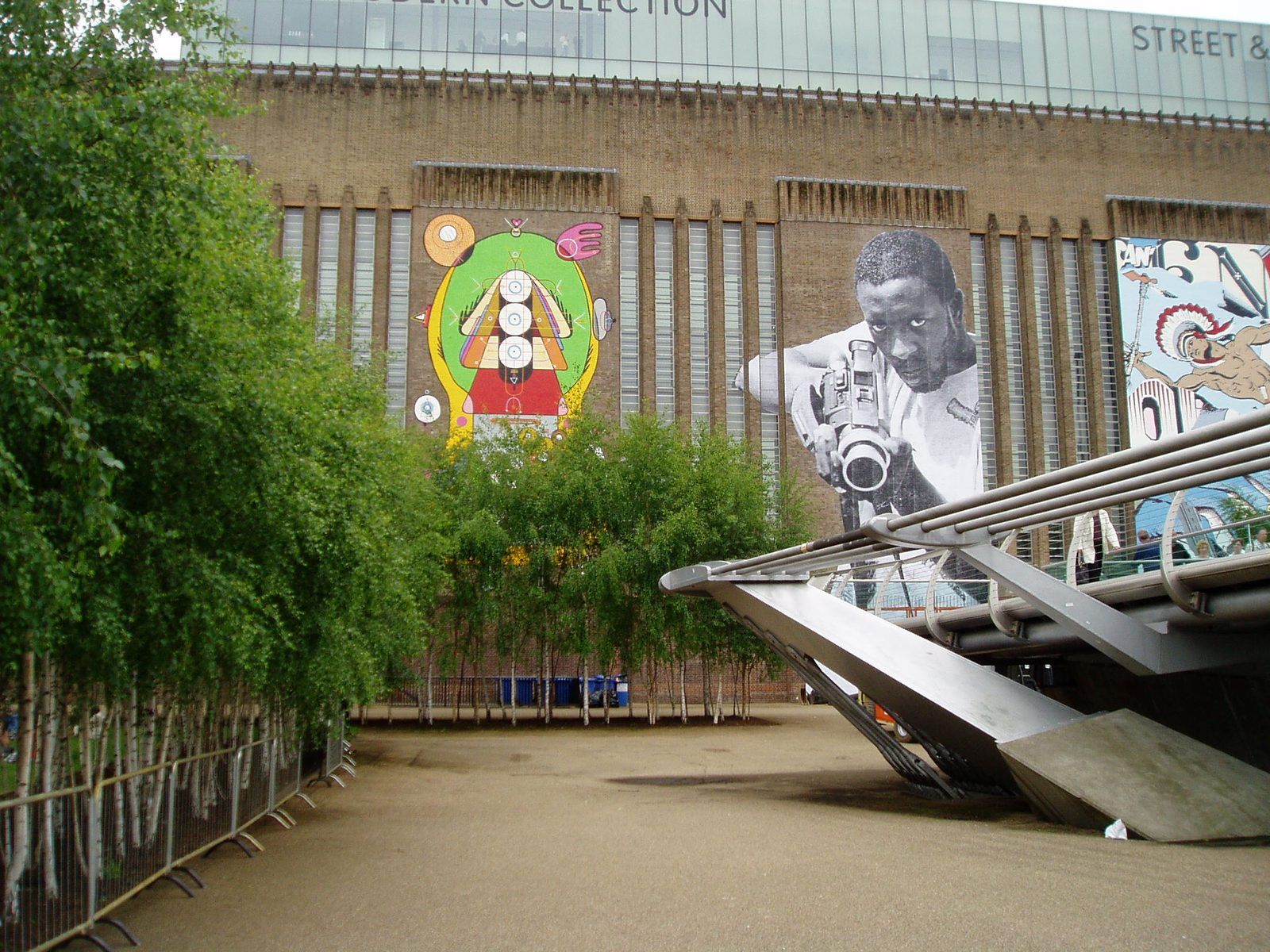
Tate Modern, Street Art, 2008. The show ran from 23 May to 25 August 2008 and presented Blu, Faile, JR, Nunca, Os Gemeos and Sixeart. Tate calls it “the first major public museum display of street art in London”. Its list is street artists, not New York subway writers, and The page gives no attendance figure.

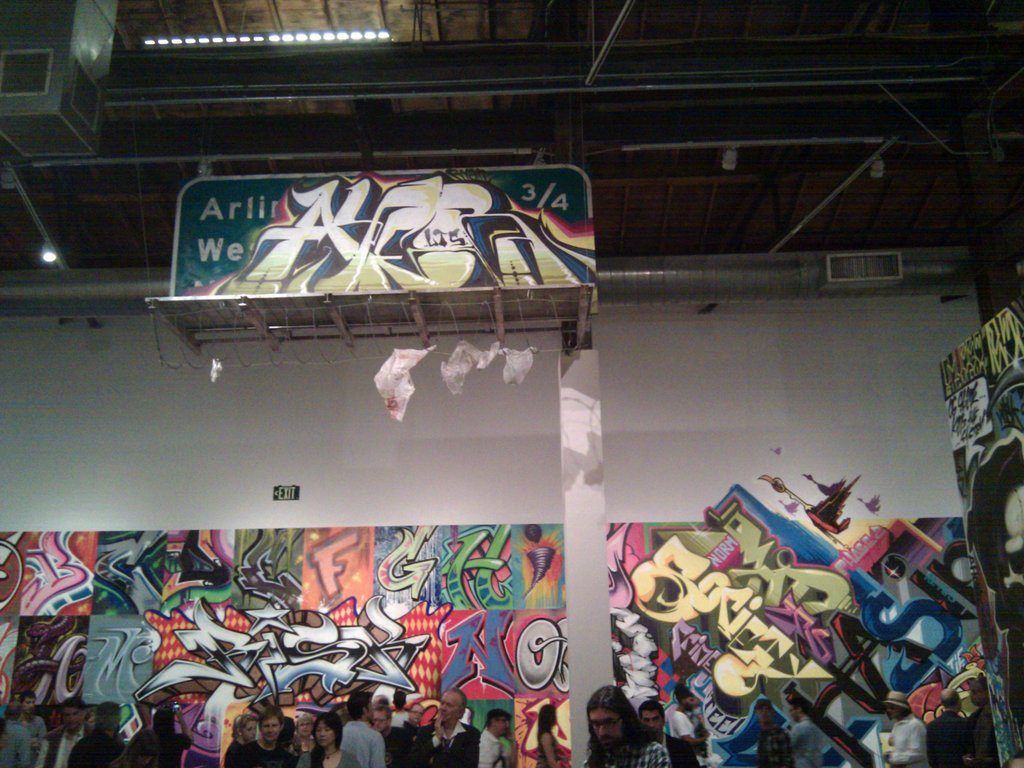
MOCA, Art in the Streets, 2011. MOCA’s page gives the dates as 17 April to 8 August 2011 at the Geffen Contemporary, organized by Jeffrey Deitch with Roger Gastman and Aaron Rose, and describes the show as tracing graffiti and street art from the 1970s to today. It says the show featured fifty artists but names none. Wikipedia’s list of participants includes Banksy, Lee Quinones, Barry McGee, Chaz Bojorquez and Rammellzee among others. MOCA’s own video channel also has a short film on Retna under the Art in the Streets title.
Attendance is where sources differ. RESPECT magazine reported 201,352 visitors and called it the most-attended show in MOCA’s history, with the 2002 Warhol retrospective at about 195,000. But the LA Times blog Culture Monster, as Hyperallergic reported, said the comparison can be misleading, because Art in the Streets ran about 16 weeks and the Warhol show about 12. Treat the 201,352 figure as a number from the press, not an audited one.
MCNY, Above Ground, 2024 to 2025. The museum showed work from the Wong collection from 22 November 2024 to 5 October 2025, with Rammellzee, Lee Quinones, Lady Pink and Futura 2000 named on its page.
Beyond the Streets, 2023. Saatchi Gallery’s announcement says Beyond the Streets London would take over all three floors from 17 February to 9 May 2023, curated by Roger Gastman, and lists Revok, Crash, Futura 2000, Lady Pink and Dondi among the artists. The Beyond the Streets organization says its shows have drawn more than 650,000 unique visitors in all. That is the organizer’s own figure, with no method given.

One more detail: Wikipedia reports that before Art in the Streets opened, MOCA had Blu’s mural on the Geffen Contemporary painted over within a day, citing HuffPost and Wired.
The writers who work in galleries
Retna, Saber, Revok and Crash are the gallery-world writers people ask about. The evidence on each is uneven.
Retna. A Phillips lot page shows his 2015 painting “Sorcery of My Style” realized £100,800 in the New Now sale against an estimate of £25,000 to 35,000. The page does not give the sale date. Wikipedia lists his crews as AWR, MSK and The Seventh Letter.
Saber. Brooklyn Street Art says he joined MSK and was later inducted into AWR, began exhibiting fine art in 2002, and finished a Los Angeles River piece in 1997 that used 97 gallons of paint over 35 nights. No museum holding or auction record for him is public.
Revok. The Saatchi release above lists him among the artists in Beyond the Streets London. His gallery biography at Jonathan LeVine Projects lists MSK and The Seventh Letter as his crews. No museum holding or auction record for him is public either.
Crash. He appears in the same Saatchi lineup. His early gallery and Brooklyn Museum history is under the heading on how graffiti got onto gallery walls, and his guitars for Fender and Eric Clapton are listed on Wikipedia. None of these pages names his crew.
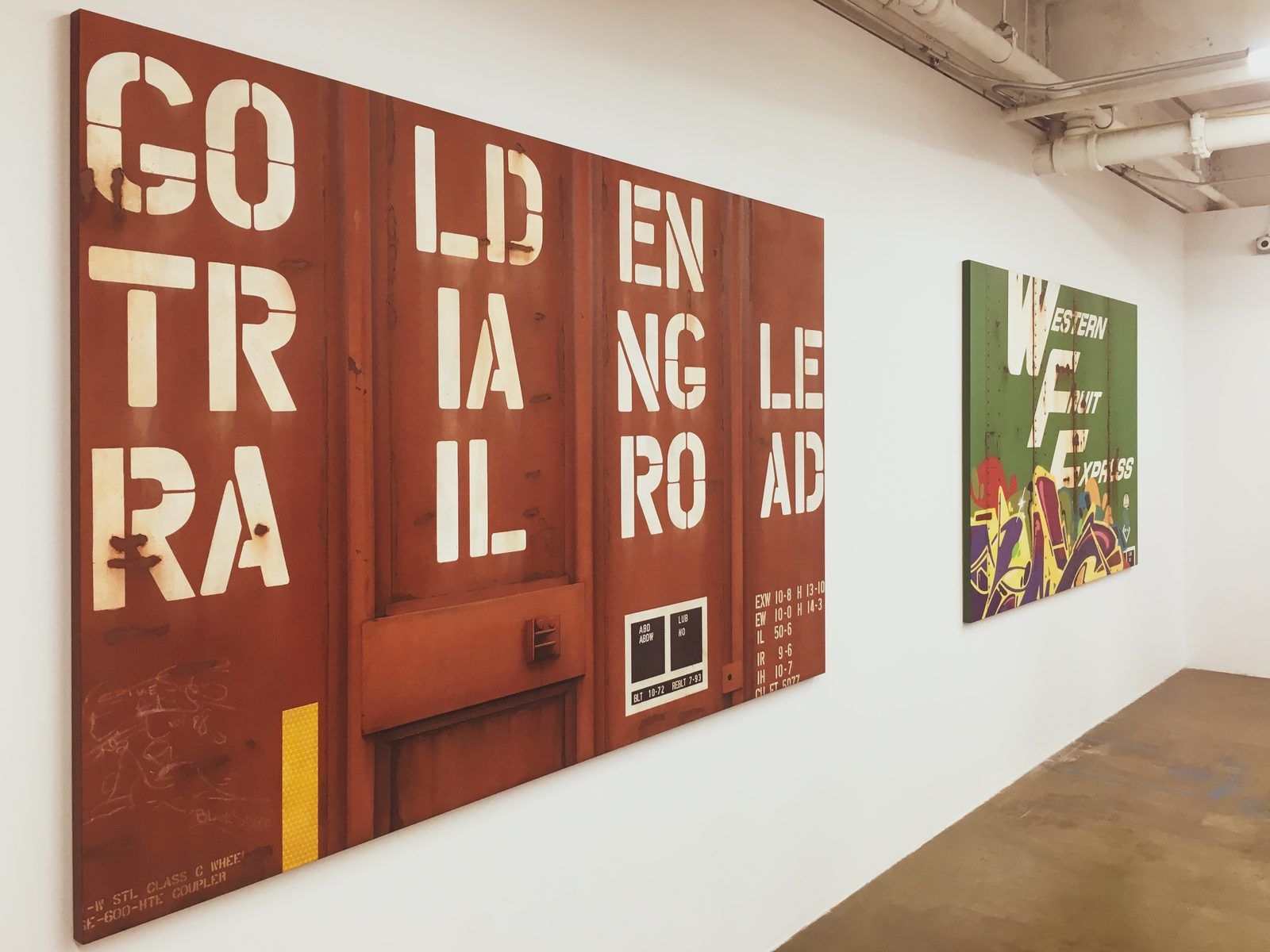
Futura and Rammellzee. Their prices are better documented. An untitled 1988 Futura canvas sold for $131,250 at Heritage Auctions on 31 March 2022, after 28 bids, the top result of that sale. A Rammellzee work of 26 paintings, “Wild Style Letter A, B, C, D, E” from 2008, realized £87,500 at Phillips against a £30,000 to 50,000 estimate.
So the pattern is visible, but the money is modest next to Banksy’s. Prices for writers who came up in subway and wall culture mostly sit in the five and six figures where records are public, and for Saber and Revok there are none.
Banksy: museums, auction houses and a shredder
Banksy is a stencil artist, so he sits on the street art side of the line, not with the subway writers. I include him because his path shows both ways in: through the front door and the side door.
The side door, 2005. The Christian Science Monitor reported that around 13 March 2005 Banksy hung unauthorized works in four New York museums: the Museum of Modern Art, the Metropolitan Museum, the Brooklyn Museum and the Museum of Natural History. The works were four framed pieces, including two altered oil paintings, a soup-can painting and an insect “specimen”. He wrote that “These galleries are just trophy cabinets for a handful of millionaires.”
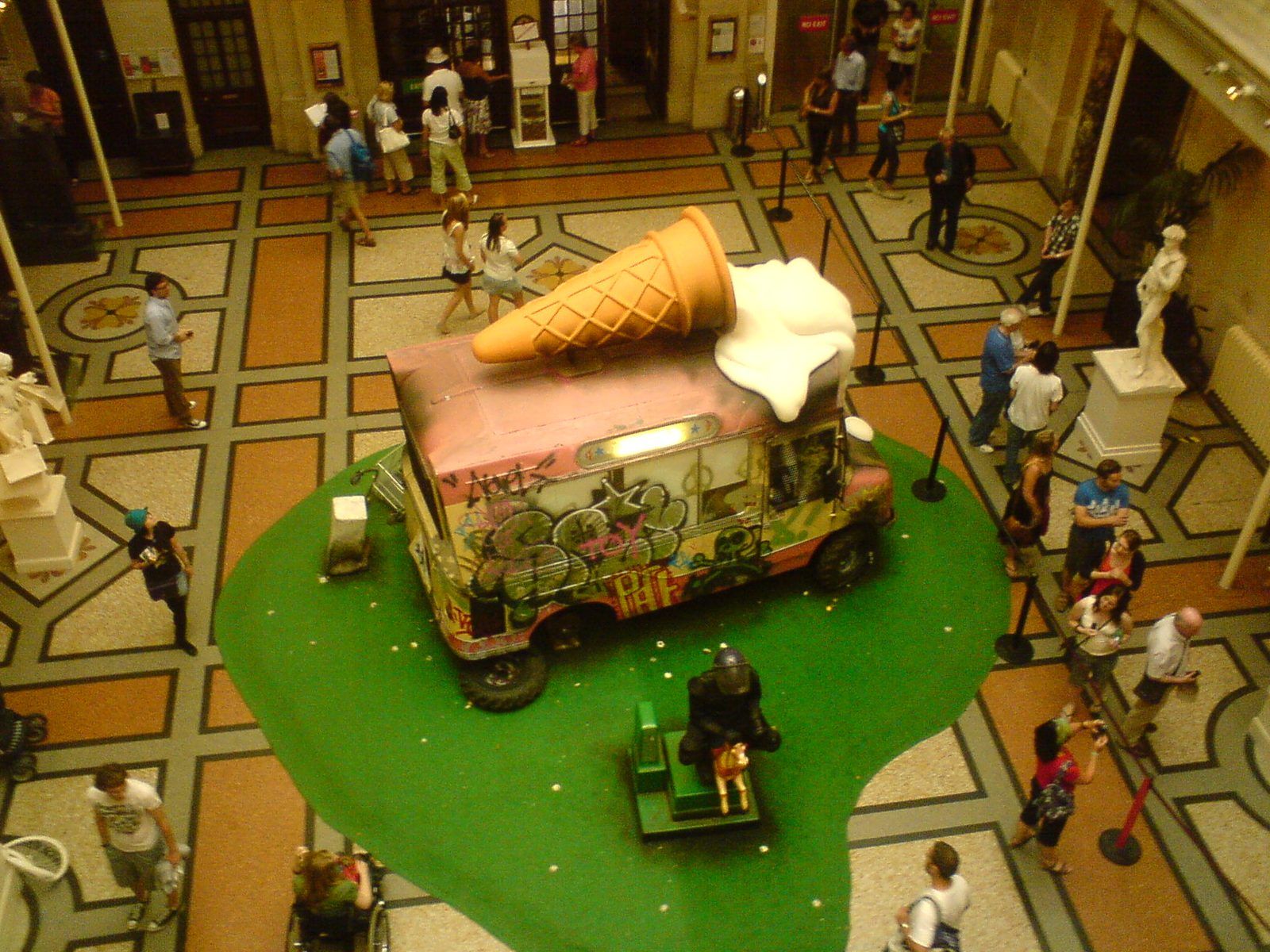
The front door, 2009. Banksy versus Bristol Museum drew 270,000 visitors in its first two months, the Museums Association reported, against 310,000 for the whole museum the year before. That is not a same-period comparison, so it shows scale, not a record.

The museum collection, 2019. The British Museum took in Banksy’s Di-faced Tenner, a fake ten-pound note with Princess Diana’s face, donated by Pest Control. The Art Newspaper reported it was in the coins and medals department, with no plans to display it.
The auction house. In October 2018 Girl with Balloon sold at Sotheby’s London for £1,042,000 and began shredding itself as the sale was announced. Sotheby’s said Pest Control certified the result as a new work titled Love is in the Bin, and the buyer agreed to keep it. In October 2021 it came back to Sotheby’s and, The Art Newspaper reported, hammered at £16 million, or £18.6 million with fees, to an Asian collector bidding by phone. The hammer price is what the auctioneer calls, and fees come on top, so “with fees” is what the buyer pays. A Sotheby’s article may word the hammer differently, so check it before you reuse the figure.
Game Changer, a painting for NHS workers, sold at Christie’s London on 23 March 2021 for a hammer of £14.4 million, £16.7 million with fees, with the artist giving the full hammer price to UK health charities.
The tension: removal, prosecution and gallery money
The same culture that fills museum rooms is still treated as a cost by cities. LAist reported in 2015 that Los Angeles spends about $7 million a year dealing with graffiti, and that crews cleaned 32.4 million square feet in 2014. A local outlet, Radio Seoul, reported that the 2026 to 2027 budget is dropping to about $11.8 million, citing the Board of Public Works. The Board’s letter itself is not public in text form, and the two figures may not describe the same thing.
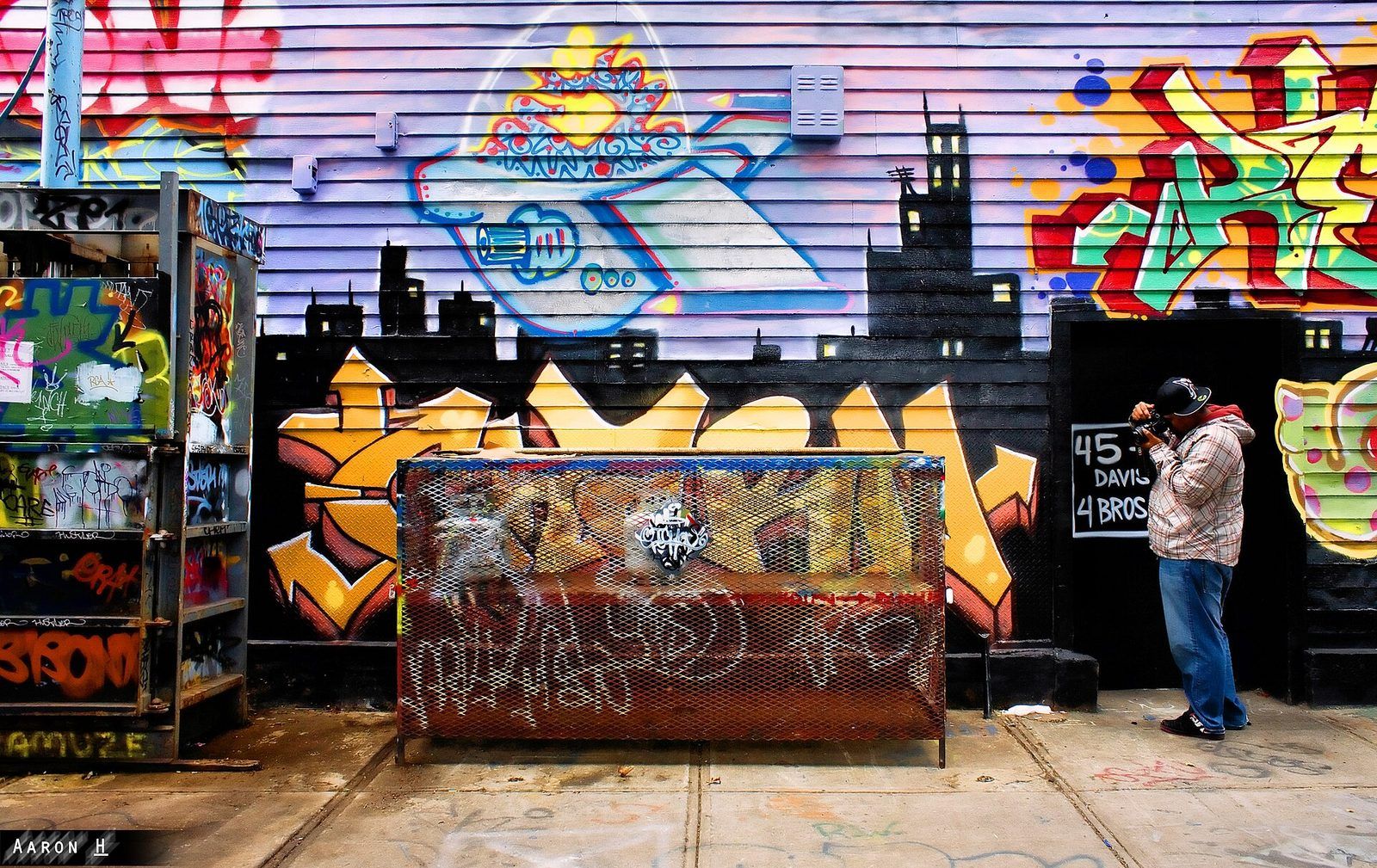

The sharpest example is 5Pointz in Queens. In 2018 Judge Frederic Block awarded $6.75 million to 21 artists, $150,000 for each of 45 works, under the Visual Artists Rights Act. The Art Newspaper quotes him calling the whitewash “an act of pure pique and revenge for the nerve of the plaintiffs to sue”. That is a report of one ruling, not a rule for every wall, and not legal advice.
Banksy shows the tension in miniature. He has called galleries trophy cabinets, and his work now sells for more than any other writer’s or street artist’s on record. Futura, Retna and Rammellzee sell too, but at a fraction of that, and the museums that hold the oldest work, MCNY and the Smithsonian, got it by donation or purchase long after it appeared on walls and trains.
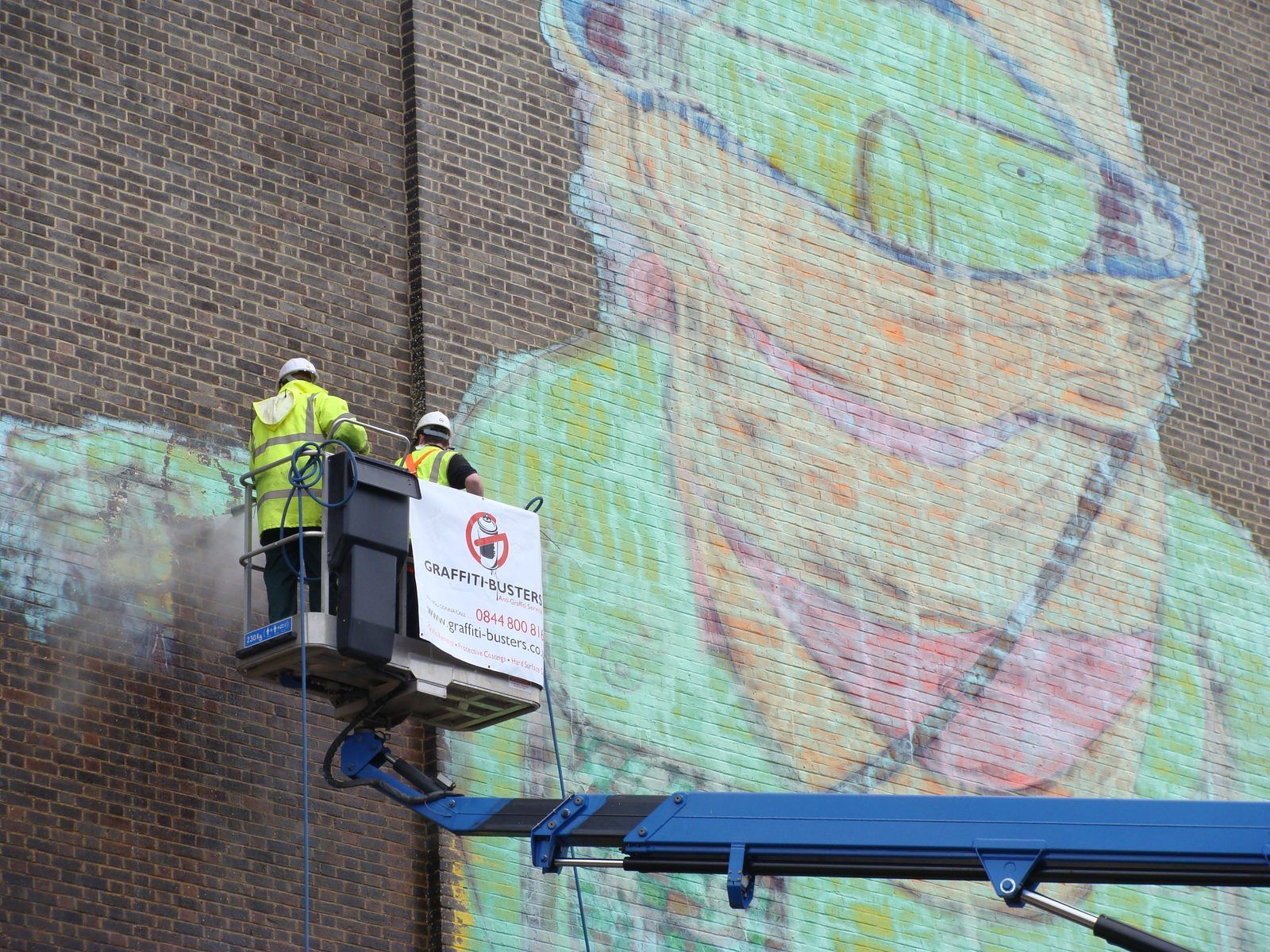
Even Tate’s 2008 show ended with a removal crew: after it closed, the Os Gemeos figure on the facade was steamed off.

What it means
Graffiti does hang in museums, and the first big surveys were in 2008 and 2011. Auction houses sell it, with Banksy far ahead of everyone else on record. And cities still remove it, which leaves the question of who decides.
Here is my reading, as a painter and a marketer. The label that changes is “permission”, not the work. A wall someone paints over is a cost, a wall that gets documented can be an asset, and a painting that hangs in a museum is a collectible. The evidence in this post shows all three treatments of the same culture.
Basquiat and Keith Haring are not in this post, because neither is clearly a graffiti writer for this question.
Related reading
- Graffiti lawsuits against brands: the cases that matter: the courtroom side of the money
- 5Pointz and the Visual Artists Rights Act: how a court valued whitewashed graffiti
- Is graffiti art? What brand budgets say: the thesis behind this series
- The LA graffiti towers: the unsanctioned side, on three unfinished skyscrapers in downtown Los Angeles
Artists mentioned
The artists and estates named in this post, with their own sites and Instagram accounts where I have confirmed them:
- Andy Warhol: website, Instagram
- Banksy: website, Instagram
- Barry McGee
- Blu: website
- Chaz Bojorquez
- Crash: website, Instagram
- Dondi
- Faile: website, Instagram
- Futura: website
- JR: website, Instagram
- Jean-Michel Basquiat: website, Instagram
- Keith Haring: website, Instagram
- Lady Pink: website, Instagram
- Lee Quinones: website, Instagram
- Martin Wong: website
- Nunca
- Os Gemeos: website, Instagram
- Pest Control Office: website
- Rammellzee: website, Instagram
- Retna: website
- Revok: website, Instagram
- Saber: website
- Shepard Fairey: website, Instagram
- Sixeart: website, Instagram
- Tim Conlon: website, Instagram
Sources
Retrieved 2026-10-29 and 2026-10-30. Where a source is secondary, the text above says so.
- Tate, Street Art, Tate Modern exhibition page, 23 May to 25 August 2008.
- Museum of Contemporary Art, Los Angeles, Art in the Streets, exhibition page, 2011.
- MOCA, RETNA, Art in the Streets, MOCAtv Ep. 6, YouTube, MOCA channel.
- Wikipedia, Art in the Streets (secondary).
- RESPECT. staff, report on Art in the Streets attendance, RESPECT, 16 August 2011.
- Hyperallergic, report on the Art in the Streets and Warhol attendance comparison, 11 August 2011.
- Museum of the City of New York, Above Ground: Art from the Martin Wong Graffiti Collection, exhibition page, 22 November 2024 to 5 October 2025.
- Saatchi Gallery, Beyond the Streets London artist line-up, press release, 2023.
- Beyond the Streets, About (organizer’s own figure).
- Phillips, Retna, Sorcery of My Style, lot page, New Now sale (date not stated).
- Phillips, Rammellzee, Wild Style Letter A, B, C, D, E, lot page, New Now sale (date not stated).
- Antiques and the Arts, report on the Heritage Urban Art sale, April 2022.
- Smithsonian American Art Museum, Somos La Luz, Chaz Bojorquez, collection page.
- SFMOMA, Barry McGee, artist page.
- Brooklyn Street Art, Saber profile.
- Jonathan LeVine Projects, Revok, artist page.
- Wikipedia, John Matos (Crash) (secondary, citing the New York Times and the Star-Ledger, 2006).
- The Christian Science Monitor, report on Banksy’s March 2005 museum hangings, 1 April 2005.
- Museums Association, Museums Journal editorial on Banksy versus Bristol Museum, November 2009.
- The Art Newspaper, report on Di-faced Tenner entering the British Museum, 1 February 2019.
- Dezeen, Banksy authenticates work that self-destructed in auction room, 16 October 2018.
- Boston.com, report that the buyer is keeping the shredded painting, 11 October 2018.
- The Art Newspaper, report on the Love is in the Bin sale, 14 October 2021.
- The Art Newspaper, report on the Game Changer sale, March 2021.
- LAist (KPCC), report on Los Angeles graffiti removal, 10 September 2015.
- Radio Seoul 1650, Koreatown graffiti surges as LA cuts removal budget, 2026 (secondary).
- The Art Newspaper, report on the 5Pointz judgment, 13 February 2018.
- NBC News, report on the National Portrait Gallery acquiring Shepard Fairey’s Obama collage, 7 January 2009.
- Image: Aaron Harewood, 5pointz graffiti.jpg, Wikimedia Commons, CC BY 2.0. The artwork shown belongs to its artists; the photo license does not cover it.
Frequently asked questions
Is graffiti in museums?
Yes. Tate Modern in London showed six street artists in 2008, the Museum of Contemporary Art in Los Angeles held a major survey of graffiti and street art in 2011, and the Museum of the City of New York holds the Martin Wong collection of more than 300 graffiti canvases and works on paper. The Smithsonian American Art Museum owns a painting by the Los Angeles writer Chaz Bojorquez.
When did graffiti enter galleries?
Some New York writers were showing in galleries by the early 1980s. Crash, for example, is reported to have had his first gallery showing at the Sidney Janis Gallery in 1983. Big museum surveys came later: Tate Modern in 2008 and the Museum of Contemporary Art in Los Angeles in 2011.
Which museums show graffiti?
Examples with sources: Tate Modern (Street Art, 2008), the Museum of Contemporary Art in Los Angeles (Art in the Streets, 2011), the Museum of the City of New York (Above Ground, 2024 to 2025), the Smithsonian American Art Museum, the National Portrait Gallery (Shepard Fairey), SFMOMA (Barry McGee), and Bristol Museum and Art Gallery (Banksy, 2009). Saatchi Gallery in London hosted Beyond the Streets in 2023.
Why is Banksy in galleries if he works on the street?
He has done both. In 2005 he hung his own works on the walls of four New York museums without permission, and he said galleries are trophy cabinets for a few millionaires. In 2009 Bristol Museum invited him in and reported 270,000 visitors in two months. His work is sold at auction houses such as Sotheby's and Christie's, and his authentication body, Pest Control, certified the shredded work as a new piece.
How much does graffiti art sell for?
It varies widely. Banksy's Love is in the Bin sold for £18.6 million with fees in 2021 and Game Changer for £16.7 million. Among writers, a 1988 Futura canvas sold for $131,250 at Heritage Auctions in 2022, and a Retna painting from 2015 realized £100,800 at Phillips against an estimate of £25,000 to 35,000.
What is the difference between graffiti and street art in a gallery?
Graffiti usually means writing: names and letters painted by writers, often without permission. Street art is a wider label that covers stencils, posters, mosaics and murals. Museums mix the two. Banksy works with stencils, so he is a street artist. Futura, Lee Quinones and Retna come from writing culture. This is a simplification, and the artists do not always agree on the labels.
Is the Banksy shredding a real event?
Yes. At Sotheby's in London in October 2018, Girl with Balloon was partly shredded by a device in its frame just after it sold for £1,042,000. Sotheby's said Banksy's authentication body had certified the result as a new work called Love is in the Bin, and the buyer kept it. It resold in 2021 for £18.6 million with fees.
Is graffiti still removed if it hangs in museums?
Yes. Unsanctioned graffiti on public and private walls is still cleaned off. LAist reported in 2015 that Los Angeles spent about $7 million a year dealing with graffiti. Museums collect the work and cities remove it, and the difference is mostly permission and ownership.
Did a court award money for destroyed graffiti?
Yes, in one case. In 2018 a federal judge in New York awarded $6.75 million to 21 artists for 45 works destroyed when the owner of the 5Pointz site in Queens whitewashed it, under the Visual Artists Rights Act. This post reports the ruling and does not give legal advice.