TL;DR
A company that sells ad space on New York subway trains once rejected a book ad because its lettering looked like graffiti. Brands often pay for that same look in their own ads, while cities pay to remove the real thing. So graffiti-style design is welcome in advertising and unwelcome on a public wall.
In January 2013, an ad for a novel was rejected for the outside of New York subway trains because it looked like graffiti. CBS Outdoor, the company that sells that ad space, turned down Adam Mansbach’s proposal for Rage Is Back, a book about a graffiti writer. Its email said the problem was the style of the lettering, and that the MTA wants nothing that looks like graffiti. Over the same decades, brands paid artists and crews for graffiti in advertising.
I work in digital marketing and analytics in Los Angeles, and I have painted for years, so this double standard is the part of the graffiti story I find most revealing. A look can be a line item in a marketing budget and a line item in a cleanup budget at the same time. This post walks through the rejection, then the brands, then the cleanup bills. The sources are linked in each sentence and listed at the end. Nothing here is legal advice.
What happened: the 2013 subway ad rejected for looking like graffiti
Mansbach is the author of Rage Is Back, a novel about a graffiti writer and his son. The cover shows three subway cars stacked vertically, with the title in graffiti-style lettering. He proposed an ad that mirrored the cover for the exterior of subway trains, and he offered to pay for it. (Hyperallergic, January 16, 2013)


CBS Outdoor, the company that handles advertising on the outside of the trains, said no. According to both Hyperallergic and Mansbach’s own account, its email said the issue “is the style of writing” and that “The MTA wants nothing that looks like graffiti.” (The Awl, January 15, 2013)
Three details are worth getting right:
- The rejection came from CBS Outdoor. It was relaying what it described as the MTA’s position. No statement from the MTA itself was reported.
- The objection was to the look, not the message. The book is about a graffiti writer, but the stated problem was lettering style.
- Money was not the barrier. Mansbach wrote that advertising stripes on the train exterior cost fifty thousand dollars for a month, and he had offered to pay.
No reversal has been reported. Both articles describe only the rejection.
That rule is a decision about one space. New York has spent decades and a great deal of money fighting graffiti on its trains, as the budgets below show. My guess, which no source states, is that a transit agency does not want its own train cars to carry the thing it is trying to stop. Mansbach’s piece makes the opposite point: that a rule against a style is hard to apply, and he asked how anyone is supposed to judge how graffiti-like a letter is. Both readings are fair. What matters for this post is what the rejection shows about the look itself.
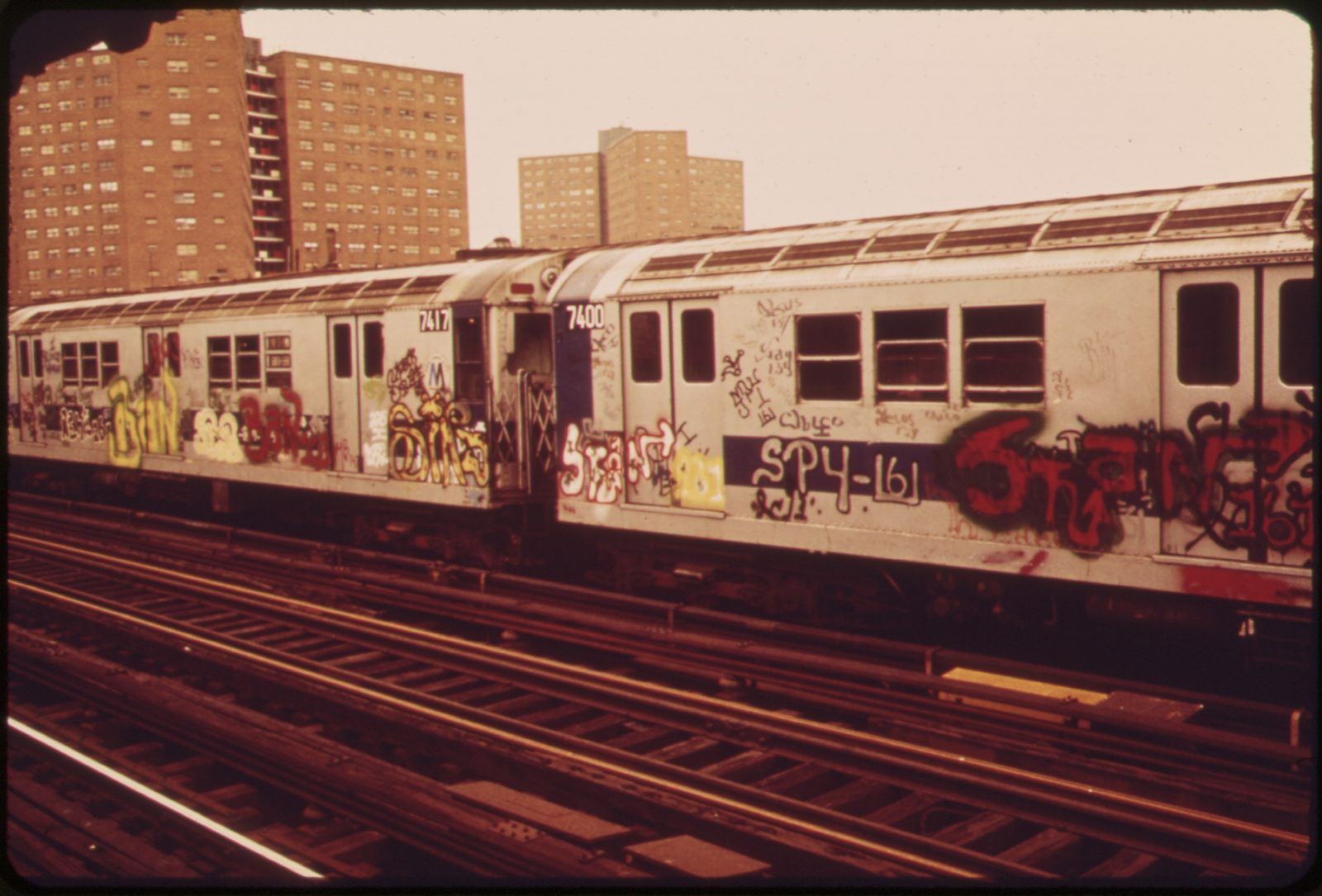

The other side of the ledger: brands that paid for graffiti in advertising
While a train-side ad was turned away for its lettering, advertisers had been commissioning graffiti and graffiti-style art for years. The documented cases fall into a few kinds. This is not a full history, and it holds no verified case of a major brand using plain graffiti lettering as a backdrop in a magazine ad.
Street ads made to look like street art. In December 2005, Sony put black-and-white graffiti of wide-eyed cartoon characters using the PlayStation Portable as a skateboard or a lollipop on walls in US cities. The ads carried no Sony branding. A Sony spokeswoman told the Associated Press the company hired artists in seven cities to spray pre-drawn designs. (AP, via The Spokesman-Review, December 30, 2005) Philadelphia’s managing director faxed Sony a cease-and-desist letter, and a local anti-blight group leader said, “They’re breaking the law.” Sony paid for graffiti and one city treated it as illegal. More on that campaign is in my post on the Sony PSP graffiti campaign.
Artists as designers. In 1985 Keith Haring designed watches for Swatch, and a Sotheby’s lot note describes a drawing he made for the promotion of those watches in LA Style magazine. (Sotheby’s lot note) In 1986 Absolut ran a series of four posters pairing its bottle with Haring’s red dancing figures on yellow, and Andy Warhol had suggested him. (The Dieline, July 9, 2025) Haring is usually filed under street art and not graffiti writing, so these are a close neighbor of the style rather than the thing itself.
Graffiti on a luxury product. For Spring-Summer 2001, Louis Vuitton and its artistic director Marc Jacobs worked with the designer Stephen Sprouse on the Graffiti Keepall 50, a bag whose screen-printed graffiti “defaces” the house monogram, in the V&A’s words. (V&A collections) It is a product and not an ad, and Sprouse was a designer, not a graffiti writer.
Writers hired as writers. Tats Cru began as a crew that wrote illegally on subway trains, became an aerosol art business in the early 1990s, and has been commissioned by companies including Coca-Cola, Firestone, Reebok and Chivas Regal, according to the Open University’s summary of Kara-Jane Lombard’s 2013 article. The same page shows a Tats Cru graffiti ad for McDonald’s. (Open University OpenLearn)
Graffiti as the plot. Pfizer Canada’s 2008 commercial from Zig Toronto makes a young man’s late-night graffiti look like vandalism, then reveals a “BE BRAVE” mural for an ill girl. (Self Storming campaign library) The ad works because viewers read the paint first as a crime and then as a gift.
None of these fees was published, so there is no number for what brands paid. What the list shows is intent: each company chose the look on purpose and paid for it.
The cleanup budgets: what cities spend to remove it
Now the other line item. A KPCC story republished by LAist reported that Los Angeles spends about $7 million a year dealing with graffiti, through its Office of Community Beautification and non-profit contractors. The city’s data showed 32.4 million square feet cleaned in 2014. (LAist, September 10, 2015)
New York’s numbers are older and come from an opinion piece. Mansbach wrote that the city spent about three hundred million dollars over 17 years from 1972, under Mayor John Lindsay, trying to run graffiti-free trains, and that subway exteriors have been free of that art since 1989. (The Awl, January 15, 2013) Treat that as his account and not an audited total. He also reports that the city still prosecutes hundreds of graffiti cases a year and keeps a Citywide Vandals Task Force, without giving a year for those figures.
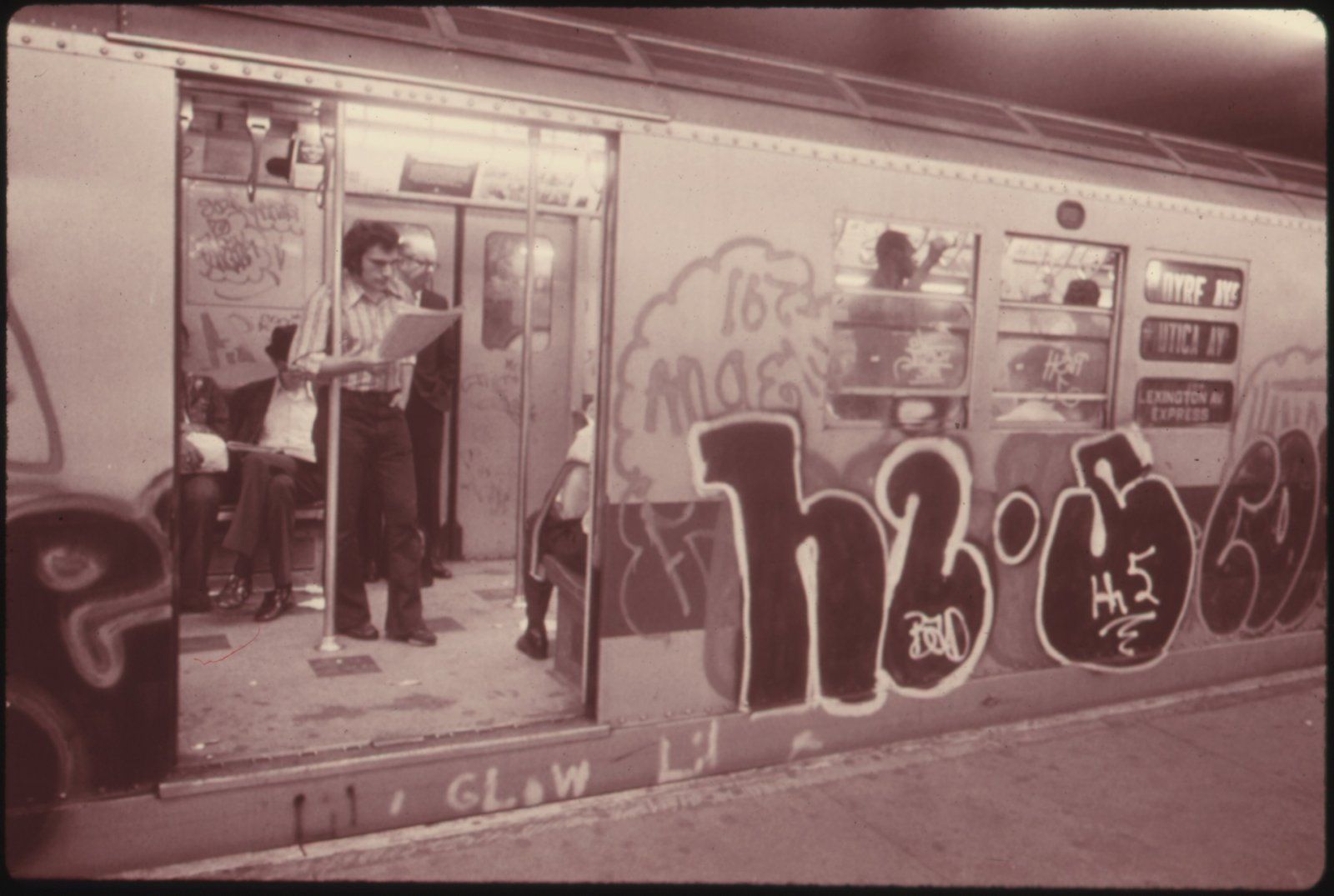

Put the budgets next to each other. One organization pays crews to remove graffiti. Others pay artists, or pay for ads that look like it.
Why the same look gets two answers
Look at what separates the cases above from the rejected ad.
- Permission and ownership. A commissioned mural is a paid job. Graffiti on a train or a public wall goes up without the owner’s consent. Sony’s campaign shows how thin that line is: it paid artists, yet Philadelphia officials treated the result as illegal.
- Who controls the space. CBS Outdoor sells train exteriors and relayed the MTA’s wishes, so what appears there is their call.
- Who is paying and what they get. A marketer buys credibility with young, urban audiences. A city buys a clean wall.
Courts have also looked at the line between copying a look and copying a work. I cover that in the Hayuk v. Starbucks case, in the lawsuits where brands copied graffiti, and in can you copyright graffiti. The short version for this post: a look is easy to borrow, and a specific work is harder.
My own read, as someone who works in marketing: the rejection and the brand budgets are consistent once you ask who owns the space and who is paying. A train-side ad slot is not a gallery and not a mural contract. It is a surface owned by an agency that has fought this look for decades. The harder question is whether that line is sensible when the book being advertised is itself about graffiti.
What this pattern says
The look is welcome in advertising and unwelcome on a public wall. The 2013 rejection shows it from the transit side, and the brand commissions show it from the marketing side. Neither is an accident. Each party treats the look as valuable or as damage depending on what it controls.
If that reads as a double standard, it is also a measure of value. Brands pay to borrow the credibility of a form that cities pay to erase. I walk through that argument, with court rulings and sales, in Is graffiti art? What brand budgets say, and I cover how the art world handled the same work in graffiti art in galleries. The full series is collected in graffiti lawsuits against brands.
How the 2013 story ended was never reported. If you know whether CBS Outdoor or the MTA ever revisited the decision, or of a verified case of a big brand running graffiti lettering as a plain backdrop in a magazine ad, write to me.
Artists mentioned
The artists and estates named in this post, with their own sites and Instagram accounts where I have confirmed them:
- Andy Warhol: website, Instagram
- Keith Haring: website, Instagram
- Maya Hayuk: website, Instagram
- Stephen Sprouse
Sources
Retrieved October 30, 2026. This post is general information, not legal advice.
- Hyperallergic, “MTA Rejects Advertising for Looking Too Much Like Graffiti,” Jillian Steinhauer, January 16, 2013
- The Awl, “The Stupidity Of New York’s Long, Expensive (And Ongoing) War On Graffiti,” Adam Mansbach, January 15, 2013
- Associated Press, via The Spokesman-Review, “Ads disguised as graffiti spark controversy,” December 30, 2005
- Sotheby’s, lot note for a Keith Haring study for a Swatch watch (1985)
- The Dieline, “Absolut’s Latest Bottle Celebrates Decades-Long Collaboration With Keith Haring,” Rudy Sanchez, July 9, 2025
- Victoria and Albert Museum, Graffiti Keepall 50, Louis Vuitton and Stephen Sprouse, Spring-Summer 2001
- Open University OpenLearn, “Graffiti in advertising,” citing Lombard (2013), Visual Communication Quarterly
- Self Storming, Pfizer Canada “Graffiti” campaign page (Zig Toronto, 2008)
- LAist (KPCC), “LA scrubs away 30 million square feet of graffiti,” Aaron Mendelson, September 10, 2015
- Photo: Erik Calonius, US Environmental Protection Agency (DOCUMERICA, National Archives), public domain, via Wikimedia Commons. Graffiti by unnamed writers.
- Photo: Jim Pickerell, US Environmental Protection Agency (DOCUMERICA, National Archives), public domain, via Wikimedia Commons. Graffiti by unnamed writers.
- Photo: Larry D. Moore, CC BY 4.0, via Wikimedia Commons.
Frequently asked questions
Why was the Rage Is Back subway ad rejected?
CBS Outdoor, which sells ad space on the outside of New York subway trains, said the issue was the style of the writing. In an email it said the MTA wants nothing that looks like graffiti. The ad was meant to mirror the book cover, which has the title in graffiti-style lettering on subway cars.
Who rejected the ad, the MTA or CBS Outdoor?
The rejection came from CBS Outdoor, the company that handles advertising on the exterior of the trains. It passed along what it described as the MTA's position. The coverage quotes no statement from the MTA itself.
Was the 2013 rejection ever reversed?
No reversal or appeal has been reported. Both articles, Hyperallergic's and Mansbach's own account in The Awl, describe only the rejection.
Can brands use graffiti style in advertising?
Yes. Sony hired artists for its 2005 PSP street ads, Louis Vuitton printed graffiti on a 2001 bag, and Tats Cru has been commissioned by companies such as Coca-Cola and Reebok. Using a real artist's work without a deal is where lawsuits start. This is general information, not legal advice.
Is graffiti illegal in New York?
Painting on public or private property without permission to mark it is treated as a crime and the city still prosecutes graffiti cases. Mansbach quotes the NYPD's definition of graffiti, which turns on a mark placed with the intent to damage property. This is general information, not legal advice.
How much do cities spend removing graffiti?
Los Angeles reported about $7 million a year in 2015, for 32.4 million square feet cleaned in 2014. Mansbach wrote in 2013 that New York spent about $300 million over 17 years from 1972 trying to run graffiti-free trains. The second figure is his, not an audited total.
Why do brands use graffiti in ads if cities remove it?
Brands are buying the look from an artist or a commissioned crew. A city is dealing with paint placed on property without the owner's consent. The same look gets a different answer depending on who paid for it and who owns the wall. Sony's 2005 ads show it is not clean: it paid artists and still drew a cease-and-desist letter.
Is graffiti art or vandalism?
It can be both. Without the owner's permission it is treated as vandalism, and with permission, a client or a gallery it is treated as art. I go through the money, cases and sales in a separate post on whether graffiti is art.