TL;DR
Whether graffiti is art or vandalism depends on who you ask and what they are paying for. Cities pay to remove it, while brands pay to buy or imitate the same look. Where graffiti has permission, from a client or a frame, it is treated as art.
Yes, graffiti can be art, and it is also treated as vandalism when it goes up without the owner’s permission. Both are true at once. Cities treat unauthorized graffiti as damage and pay crews to remove it. Brands, galleries and courts treat the same look as valuable and pay to commission it, display it or imitate it. That gap, between the budget to scrub graffiti off a wall and the budget to put it in an ad, is the best evidence that graffiti is art in the way that matters to the people spending money.
I work in digital marketing and analytics in Los Angeles, and I have painted for years, so I notice where a look shows up and who pays for it. This post follows the money: removal budgets, ad campaigns, lawsuits and auction results. Each claim links to its source, and the full list is at the bottom. Nothing here is legal advice.
Is graffiti art or vandalism? The short answer
The question has two halves, and they use different tests.
“Is it vandalism?” is about permission. Paint on a wall without the owner’s consent is damage in most cities, and cities act on that. “Is it art?” is about value, and value is set by people who buy, show and imitate things. Graffiti passes the second test in boardrooms and auction rooms while failing the first in city hall.
So the useful version of the question is not which side is right. It is who is paying for it, and what they think they are getting.
The case that it is vandalism: what cities spend to remove it
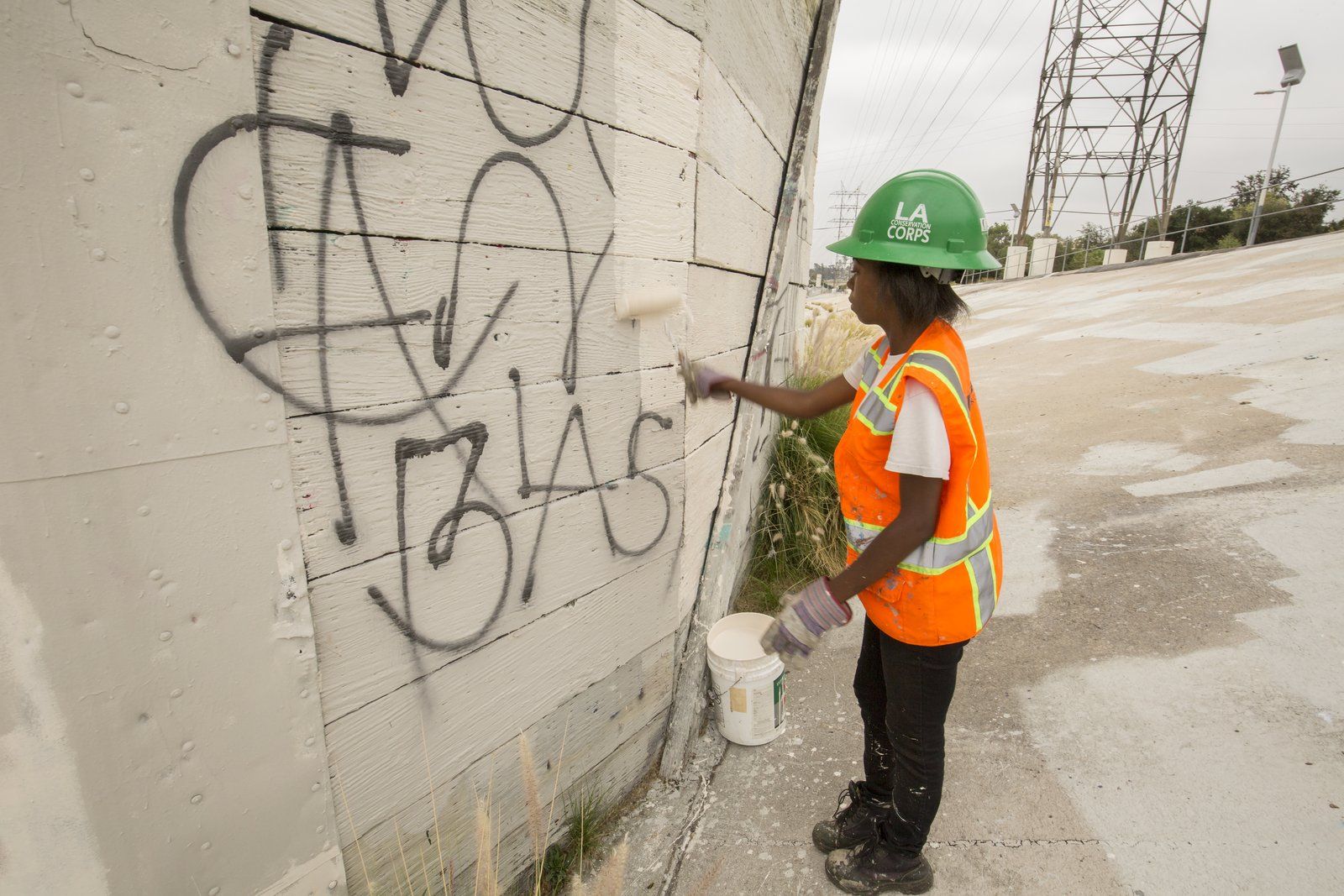
Los Angeles has the clearest public budget. A KPCC story republished by LAist in 2015 reported that the city spends about $7 million a year on graffiti removal, through its Office of Community Beautification, with non-profit contractors doing most of the cleanup. (LAist, 2015) A community news outlet reported in July 2026, citing the Board of Public Works, that the 2026-27 abatement budget is about $11.8 million, down $2.3 million from the year before, with removal crews cut from about 95 to 75. (Radio Seoul 1650, July 2026) That last figure is a press report, not a city document.
Either way, the point stands. A city treats graffiti as a cost to be removed, and it writes that cost into a budget every year.
The case that it is valued: what brands pay for the look
Now look at the other side of the ledger. Brands have used graffiti, graffiti writers and the graffiti look for decades, and the verified examples fall into a few kinds.
Street ads that look like street art. In December 2005, Sony put black-and-white graffiti of wide-eyed cartoon characters riding the PlayStation Portable on walls in several US cities. The ads carried no Sony branding. A Sony spokeswoman told the Associated Press that artists were hired in seven cities to spray pre-drawn designs. (AP, via The Spokesman-Review, 2005) Philadelphia’s managing director faxed Sony a cease-and-desist letter, and a local anti-blight group said the ads broke the law. Sony paid for graffiti, and the city treated the result as illegal.
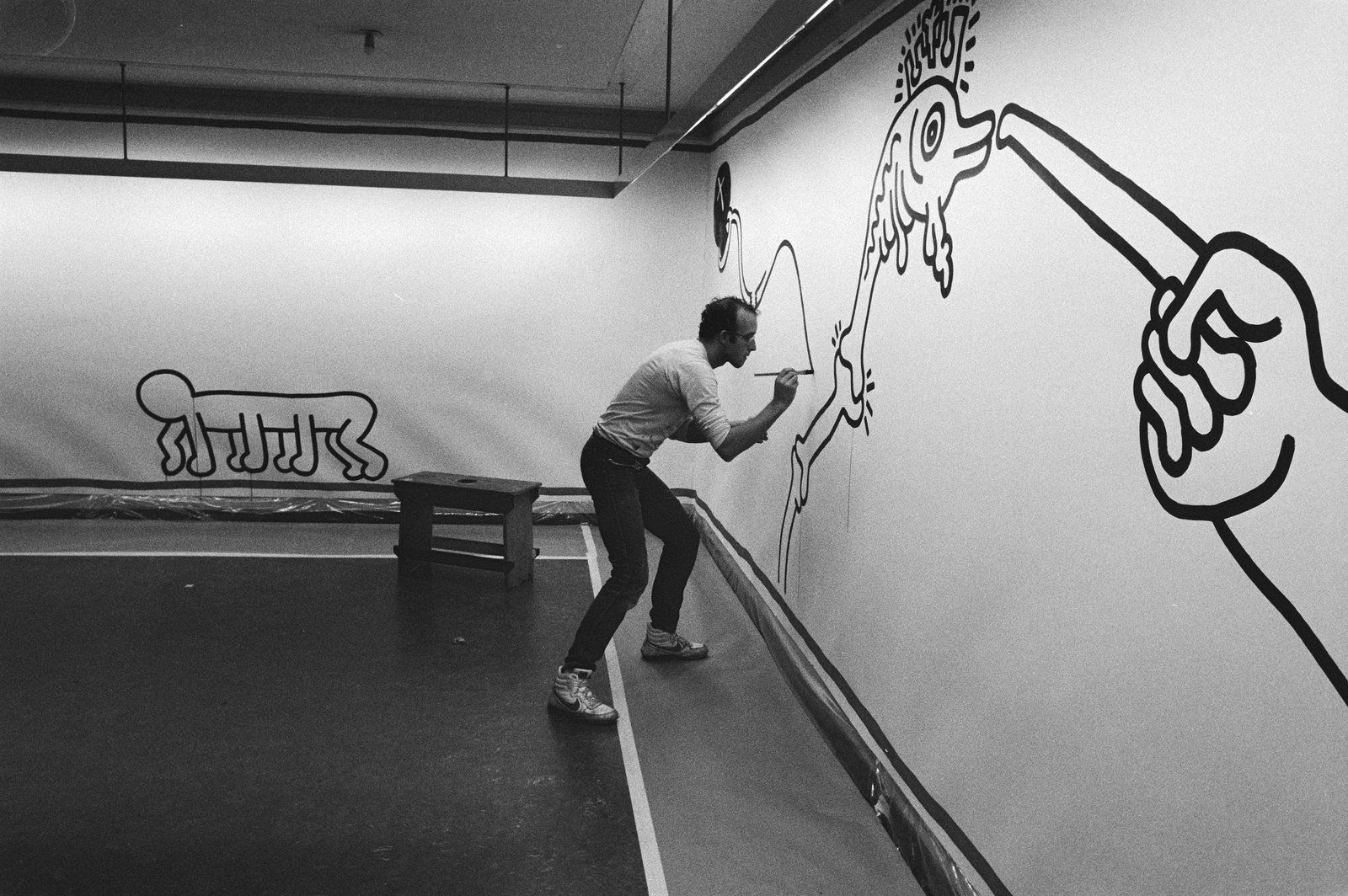
Artists as designers. In 1985 Keith Haring designed watches for Swatch, and a Sotheby’s lot note describes a drawing he made for the promotion of those watches in LA Style magazine. (Sotheby’s lot note) In 1986 Absolut ran a series of four posters pairing its bottle with Haring’s red dancing figures on yellow; Andy Warhol had suggested him. (The Dieline, 2025) Haring is usually filed under street art and not graffiti writing, so these count as the art world’s close neighbor of the style.

Graffiti on a luxury product. For Spring-Summer 2001, Louis Vuitton and Marc Jacobs worked with the designer Stephen Sprouse on the Graffiti Keepall 50, a canvas bag with screen-printed graffiti over the house monogram. (V&A collections) It is a product and not an ad, and Sprouse was a designer, not a graffiti writer. It still shows a heritage luxury house deciding that a defaced monogram sells.
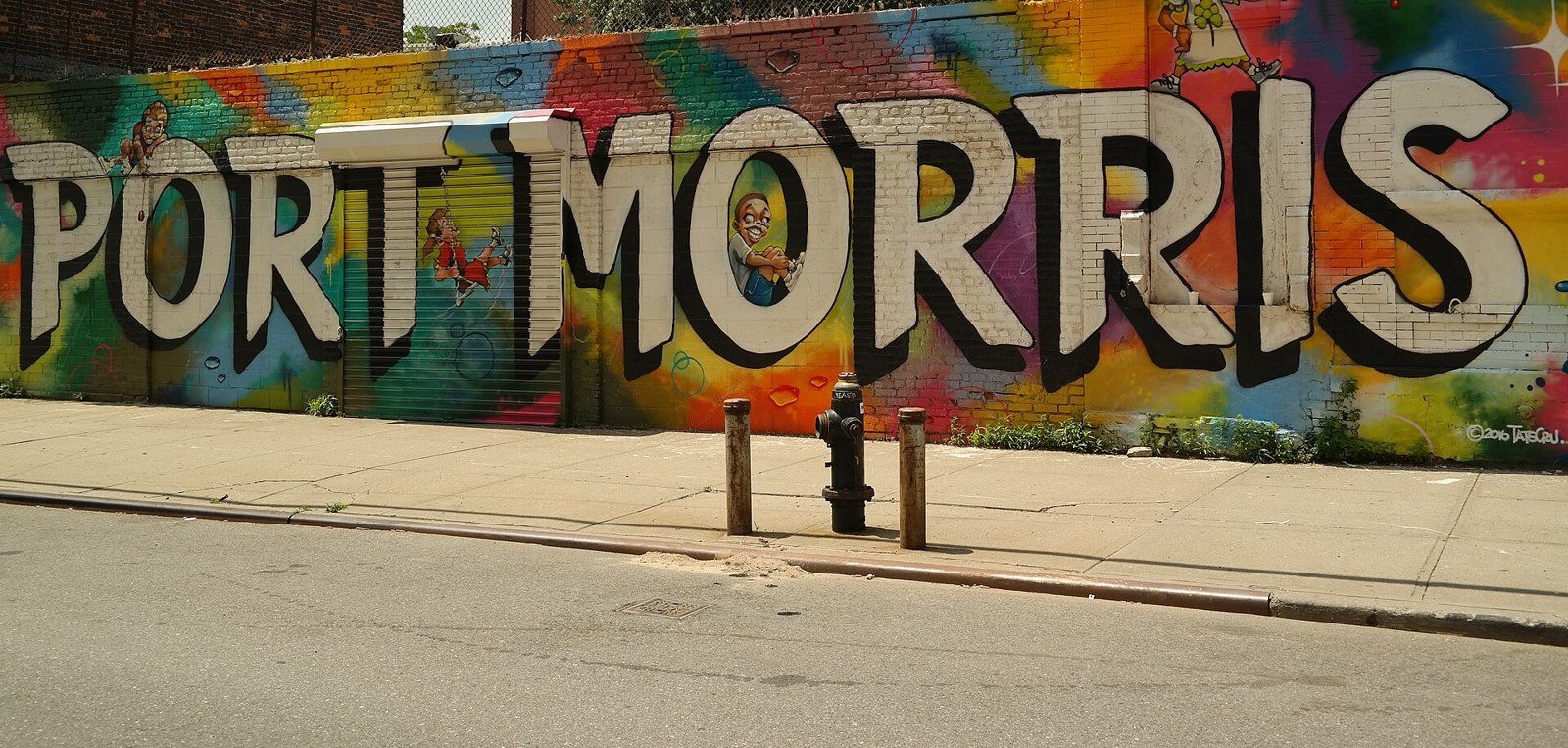
Writers hired as writers. Tats Cru began as a crew that painted trains illegally, incorporated in the early 1990s, and has been commissioned by companies including Coca-Cola, Firestone, Reebok and Chivas Regal, according to the Open University’s summary of the scholar Kara-Jane Lombard’s 2013 work. The same page uses a Tats Cru graffiti ad for McDonald’s as its example. (Open University OpenLearn)

A wall as a store: Nike’s Air Max Graffiti Stores. In 2019 Nike and its agency AKQA Sao Paulo asked artists from Instagrafite, a Brazilian street art collective, to update existing graffiti characters on Sao Paulo walls so that the characters wore new Air Max sneakers. (WPP case study) The shoes were not sold in a shop. A fan had to visit the wall, open Nike.com and unlock the purchase through their phone’s location. (WPP case study) AKQA says the murals lifted visits to Nike.com by 22% and reached 80 million people on social media. (AKQA) Those are the agency’s own numbers, and Adweek reports the same 22% for visits. The campaign won a Grand Prix at Cannes Lions in 2019, and Adweek reports the jury president, Karen Blackett, saying the brand had tapped into something that was already part of the culture.
It also arrived while officials in Sao Paulo were erasing graffiti. D&AD describes the project as a response to the governor’s erasure of the city’s street art, and Adweek says the mayor had cracked down, so the sources differ on who ordered it. (D&AD) As graffiti marketing, it shows the split this post is about in one campaign: officials removing graffiti while a brand used it to sell. For the agency’s side, here is D&AD’s 26-minute interview with Luiza Baffa and Renato Zandona of AKQA Sao Paulo, who talk about tapping into street culture and going up against local government.
There is also a shorter case study video, Nike - Air Max Graffiti Stores (Case Study) | Campaign, a two-minute film uploaded in 2024 by the Campaign Unpacked channel. Its description carries the agency’s written case summary. It is a third-party upload, so it is linked rather than embedded, and the numbers above come from AKQA, WPP and Adweek, not from it.
Graffiti as the story. Pfizer Canada’s 2008 commercial from Zig Toronto opens on what looks like a young man vandalizing a wall at night, then reveals a mural that says “BE BRAVE” for a sick child. (Self Storming campaign library) The ad works because viewers first read the paint as a crime and then as a gift. Ecko’s “Still Free” film, which shows graffiti writers tagging Air Force One, is in the D&AD awards archive with a stated aim of strengthening the brand’s graffiti roots. (D&AD)
That is the brand side of the ledger: hired artists, commissions, product lines and awards. None of these fees was published, so there is no number for them. What the list shows is that every one of these companies chose graffiti on purpose.
The double standard, and what the law says
The sharpest example of the gap is a rejected subway ad. In 2013, the publisher of Adam Mansbach’s novel Rage Is Back, about a graffiti writer and his son, tried to advertise it on the outside of New York subway trains. CBS Outdoor, which sells that space, turned it down, saying the problem was the style of the lettering and that the MTA wanted nothing that looked like graffiti. (Hyperallergic, January 2013) Transit advertising turned away a look, while brands were paying for it elsewhere.
Courts have been just as split. This section is general information, not legal advice.
- Style is not protected. In Hayuk v. Starbucks, the artist Maya Hayuk said a Starbucks campaign copied her work. A federal judge in New York dismissed the case on January 12, 2016, finding that her theory amounted to copying her style or ideas, which copyright law does not protect. (SDNY Blog, 2016) That helps explain why brands can borrow the look so freely.
- Copying the work itself can be. In 2014 the writers Revok, Reyes and Steel sued Roberto Cavalli over clothing that used their San Francisco mural, saying their signatures had been rearranged. In February 2015 a federal court refused to dismiss their claims other than copyright infringement, which the defendants had not challenged. (Rebecca Tushnet, 2015) The artists later moved to dismiss after a settlement. The terms are confidential. (The Fashion Law, 2017)
- H&M sued first, then backed off. After Revok demanded payment for a mural shown in its campaign, H&M sued him on March 9, 2018, arguing the work was made through criminal conduct and that copyright is a privilege that does not cover illegal work. It dismissed the case on March 16, after public criticism, with a statement that it should have acted differently. No court ruled. (Grossman LLP, 2018; Hyperallergic, 2018) That dismissal did not resolve H&M’s claim about reproduction rights in the mural.
- Destroying permitted work costs money. In the 5Pointz case, Judge Frederic Block awarded 21 artists $6.75 million under the Visual Artists Rights Act, $150,000 for each of 45 works, after developer Gerald Wolkoff whitewashed the Queens walls. (The Art Newspaper, 2018) Those works were made with permission, so this tells us about commissioned work, not illegal tags.
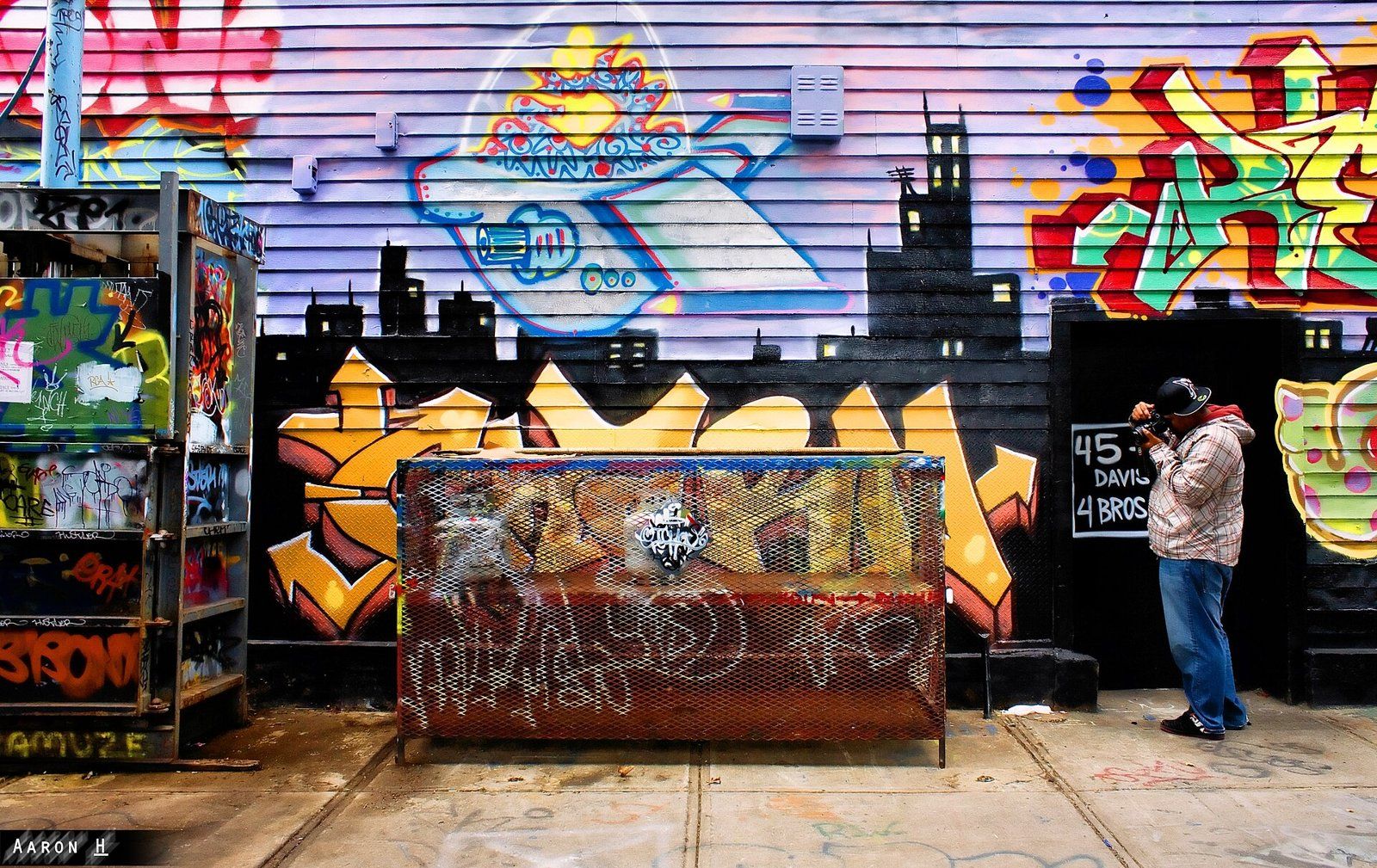

Put together, the picture is consistent. Brands can copy a style and a city can remove a wall, but an artist’s actual work, when it was made with permission, has real legal value.
What the market says
Money also shows up at auction. Banksy’s Girl with Balloon sold at Sotheby’s in 2018 with a hammer price of about 1 million pounds and was shredded just after the hammer fell. Three years later the shredded work, renamed Love is in the Bin, sold at Sotheby’s London on October 14, 2021 for 18.6 million pounds with fees, on a hammer price of 16 million. (The Art Newspaper, 2021) In raw numbers, that one sale is more than Los Angeles’s reported yearly removal budget in either figure above. Banksy is usually described as a stencil or street artist and not a graffiti writer, so he is evidence about the look and not the only proof.
Museums have followed. The Museum of Contemporary Art, Los Angeles, ran Art in the Streets from April 17 to August 8, 2011, and describes it as the first major US museum survey of graffiti and street art, with fifty artists. (MOCA) A trade site reported 201,352 visitors, but it did not name its source for that number, and other outlets give different totals, so it is an estimate. (RESPECT, 2011) Tate Modern’s 2008 Street Art show featured six artists, and its own text separates street art from text-based graffiti and tagging. (Tate)
Graffiti vs street art: does the label matter?
It matters to marketers. When a brand says “street art,” it usually means something more legible and friendly than a writer’s tag. The Dutch museum STRAAT describes the difference this way: graffiti is mostly about stylizing the writer’s name, a code for insiders, while street art uses figurative images for the general public. (STRAAT) The same page notes that both are often labeled vandalism, and that the words overlap in practice.
That helps explain the pattern in this post. Lettering and tags tend to meet removal crews, while friendlier imagery tends to meet clients, which is also why Banksy and Haring sit more easily in ads and galleries than a train tag does. The look is wanted. It is the source that is judged.
So, is graffiti art?
Yes, in the sense that matters for this question: people with budgets treat it as having value. Brands pay to commission it, borrow its credibility and put it in magazines, commercials and on the street. Museums stage shows of it. Courts have awarded money for work destroyed.
It is also vandalism when it goes up without permission, and cities spend millions a year because of that. Los Angeles alone reported about $7 million a year in 2015. Those two facts do not cancel out. They describe one thing seen through two budgets.
My own conclusion is measured. The label “art” is not decided by the paint or the lettering. It is decided by permission, by who is paying and by who is looking. A brand that hires a crew like Tats Cru, a city that scrubs an unsanctioned wall and a court that awards money for a whitewashed mural are each treating the work as valuable. They just disagree about whose it is.
There is no verified case on record of a big brand using plain graffiti lettering as a backdrop in a magazine ad. Most documented cases are commissions, stunts or products. If you know of one, write to me.
Related reading
- Graffiti lawsuits against brands: the cases that matter: the Cavalli, Moschino, American Eagle, H&M, 5Pointz and Hayuk cases in one place
- The subway ad rejected for looking like graffiti: the 2013 story behind the double standard
- The Sony PSP graffiti campaign (2005): ads disguised as street art
- Can you copyright graffiti?: what the law and the cases say
- The LA graffiti towers: Oceanwide Plaza, where the city declined to pay for removal on a private building
Artists mentioned
The artists and estates named in this post, with their own sites and Instagram accounts where I have confirmed them:
- Andy Warhol: website, Instagram
- Banksy: website, Instagram
- Instagrafite: website, Instagram
- Keith Haring: website, Instagram
- Maya Hayuk: website, Instagram
- Revok: website, Instagram
- Reyes
- Steel
- Stephen Sprouse
Sources
Retrieved October 29 and 30, 2026. This post is general information, not legal advice.
-
Radio Seoul 1650, “Koreatown Graffiti Surges as LA Cuts Removal Budget,” July 20, 2026
-
Sotheby’s, lot note for a Keith Haring study for a Swatch watch (1985)
-
Self Storming, Pfizer Canada “Graffiti” campaign page (Zig Toronto, 2008)
-
Hyperallergic, “MTA rejects advertising graffiti,” Jillian Steinhauer, January 16, 2013
-
Rebecca Tushnet’s 43(B)log, “Copying graffiti could infringe copyright and trademark,” March 2, 2015
-
Grossman LLP Art Law Blog, “H&M raises, and then drops, a lawsuit,” Kate Lucas, March 21, 2018
-
RESPECT, “L.A. MOCA sets, breaks attendance records with Art in the Streets,” August 2011
-
Ads of the World, Air Max Graffiti Stores, credits (Nike, AKQA Sao Paulo, February 2019)
-
Campaign Unpacked on YouTube, “Nike - Air Max Graffiti Stores (Case Study) | Campaign,” 2024, a third-party upload of a two-minute case study, linked and not embedded
-
STRAAT Museum, “What are the similarities and differences between graffiti and street art?”
-
Photo: Jeff Reuben, CC BY-SA 4.0, via Wikimedia Commons. Mural by Tats Cru.
-
Photo: Aaron Harewood, CC BY 2.0, via Wikimedia Commons. Works by various artists.
-
Photo: Ian Shive / US Fish and Wildlife Service, CC BY 2.0, via Flickr. Tags by unnamed writers.
-
Video: D&AD, “Behind the Work: Nike Air Max Graffiti Stores,” 2021, on YouTube. Official D&AD channel; interview with Luiza Baffa and Renato Zandona of AKQA Sao Paulo.
-
Photo: Rob Bogaerts / Anefo, Nationaal Archief, CC0, via Wikimedia Commons. Mural by Keith Haring.
-
U.S. District Court, Cohen v. G&M Realty, 2013 opinion, page 8 footnote 5, citing English on illegally placed graffiti and VARA.
Frequently asked questions
Is graffiti art or vandalism?
It can be both. Graffiti made without the owner's permission is treated as vandalism by cities, and Los Angeles reported spending about $7 million a year on removal in 2015. The same look is paid for by brands, shown by museums and sold at auction, so whether it counts as art depends on permission, context and who is paying.
Is graffiti legal?
Painting on a wall without the owner's permission is generally not legal, and cities remove it. Graffiti made with permission or on commission, such as a brand mural or a museum show, is a different situation. This is general information, not legal advice, and the rules differ by city and state.
What is the difference between graffiti and street art?
The terms overlap. STRAAT museum describes graffiti as mostly about stylizing the writer's name for other writers, and street art as figurative and meant for everyone. Tate's 2008 show used street art for more visual work than text-based graffiti and tagging. Many people use the words interchangeably.
Can brands use graffiti in advertising?
Yes, and many have. Sony hired artists for its 2005 PSP street ads, Louis Vuitton printed graffiti on a 2001 bag, Tats Cru has been commissioned by companies such as Coca-Cola and Reebok, and Nike's 2019 Air Max Graffiti Stores campaign in Sao Paulo turned graffiti walls into a way to buy sneakers. Using a real artist's work without a deal is where disputes start, as with the Cavalli and H&M cases.
What is an example of graffiti advertising?
In 2019 Nike and its agency AKQA Sao Paulo had artists from the Instagrafite collective update existing graffiti characters in Sao Paulo so they wore new Air Max sneakers, and fans unlocked the purchase on Nike.com by visiting the wall. AKQA reports 22% more visits to Nike.com and an 80 million social media reach, and the campaign won a Grand Prix at Cannes Lions. Sony's 2005 PSP street ads are an older example, made to look like street art.
Can you copyright graffiti?
Artists have sued brands over graffiti, and in the Cavalli case a 2015 ruling let most claims go forward. H&M dropped its suit before a ruling on whether it could use an unauthorized mural in advertising. A 2016 ruling also said copying a style is not infringement. This is not legal advice.
Who owns graffiti on a wall?
The artist can hold rights in the work even though someone else owns the wall. In the 5Pointz case, a judge awarded 21 artists $6.75 million, $150,000 for each of 45 works, after the building owner whitewashed them. Those works were made with permission. That judgment does not establish the same protection for unauthorized work. A separate earlier case, English v. BFC&R, rejected a VARA claim involving illegally placed graffiti; reproduction copyright is a different issue.
Why do cities remove graffiti?
Cities treat unauthorized graffiti as damage to property and budget for crews to remove it. Los Angeles reported about $7 million a year in 2015, and a July 2026 report put its 2026-27 abatement budget near $11.8 million.
Is graffiti worth money?
Some is. Banksy's Love is in the Bin sold at Sotheby's in 2021 for 18.6 million pounds with fees, after the same image sold for about 1 million pounds in 2018. Banksy is usually called a street artist rather than a graffiti writer, and most graffiti has no market value.
Is a mural graffiti?
Not necessarily. Tats Cru began as a crew painting trains illegally and now takes commissions from companies, including a graffiti ad for McDonald's. Work made with permission and paid for is treated differently from unsanctioned paint, which is part of why the line keeps moving.