TL;DR
A New York building owner painted over a famous graffiti site, and the artists sued under a federal law that protects some artwork from destruction. They won a large award, and an appeals court upheld it. The artists had permission to paint there, so the case does not say whether illegal graffiti is protected.
The short answer
The 5Pointz graffiti artists won $6.75 million because the Visual Artists Rights Act (VARA) lets an artist stop the destruction of a work of recognized stature, and a federal judge found that the owner destroyed 45 such works on purpose. In November 2013 the owner of the 5Pointz buildings in Long Island City, Queens, whitewashed the graffiti. In 2018 Judge Frederic Block awarded the maximum, $150,000 per work, and in 2020 the Second Circuit affirmed.
This post explains the case and the statute in plain words, from the court record and law firm write-ups. It reports what judges decided, and it is not legal advice. It is part of a series on how courts, cities and brands treat graffiti, and the overview is in graffiti lawsuits against brands.
What happened at 5Pointz
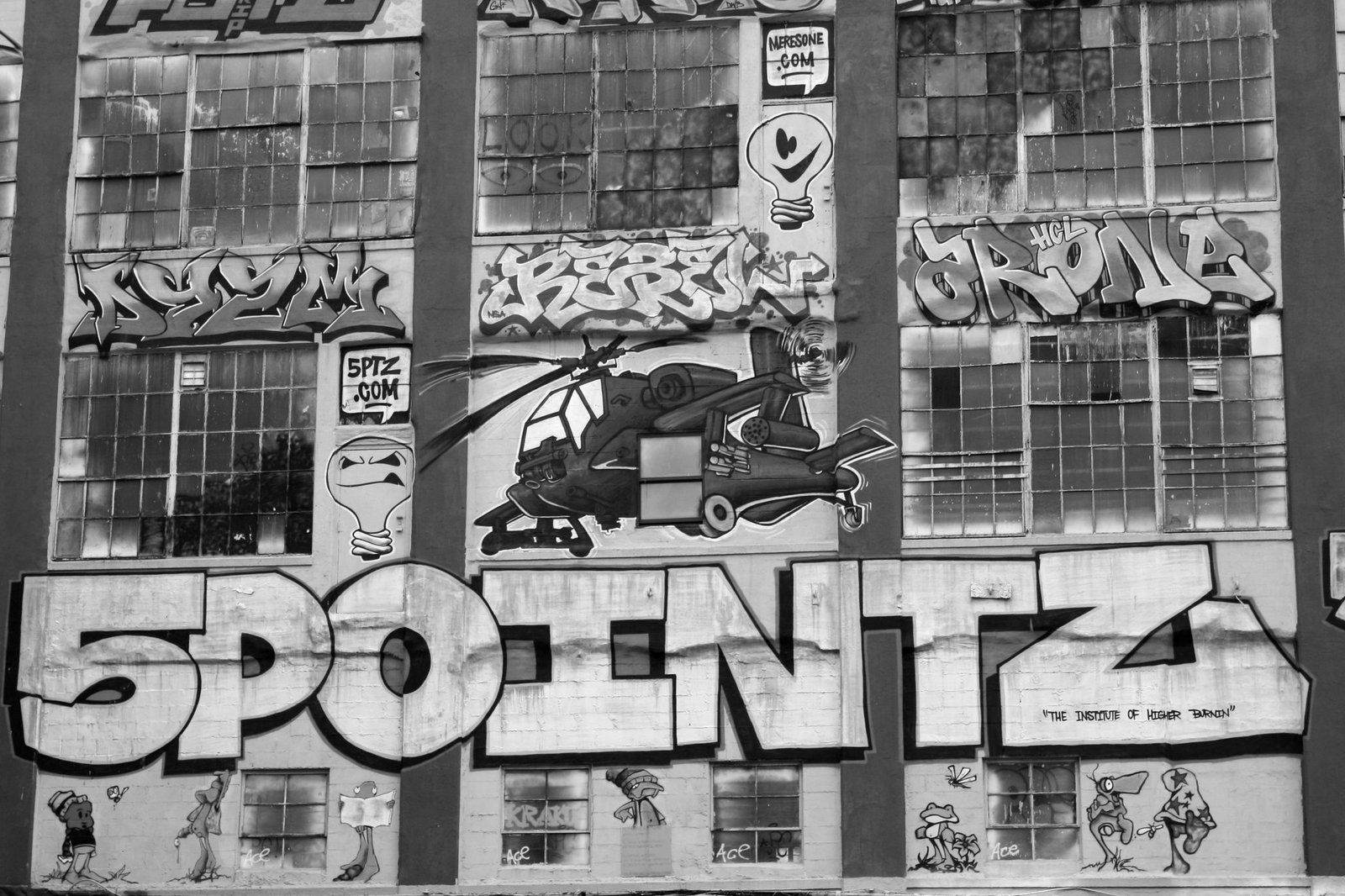
5Pointz was a group of former warehouse buildings in Long Island City, Queens. Wikipedia reports that the graffiti artist Jonathan Cohen, who paints as Meres One, began curating the walls in 2002 and renamed the site 5 Pointz. A Hughes Hubbard and Reed art law post says the owner, Gerald Wolkoff, had let aerosol artists paint on the walls since the early 1990s, so the work was authorized.
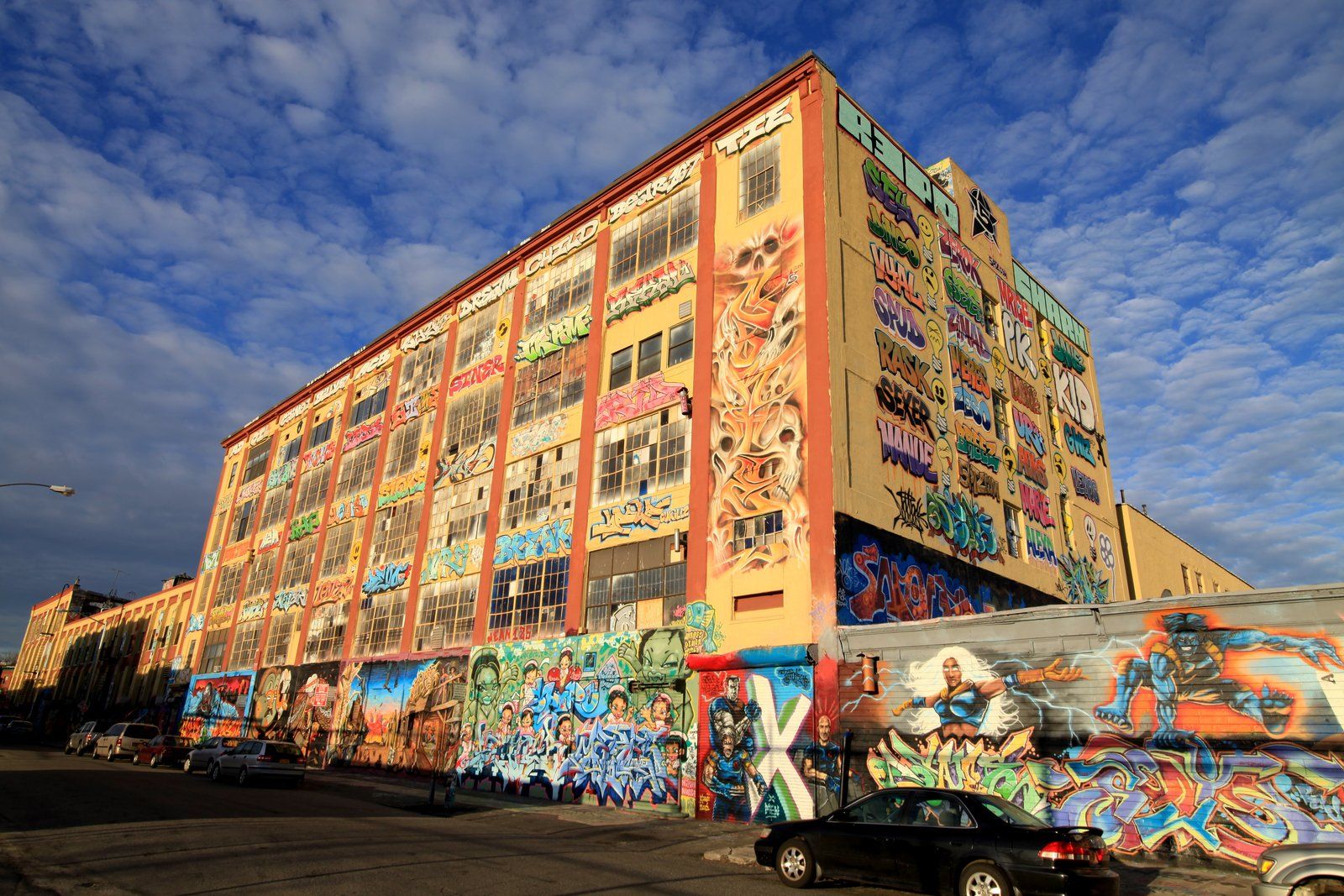

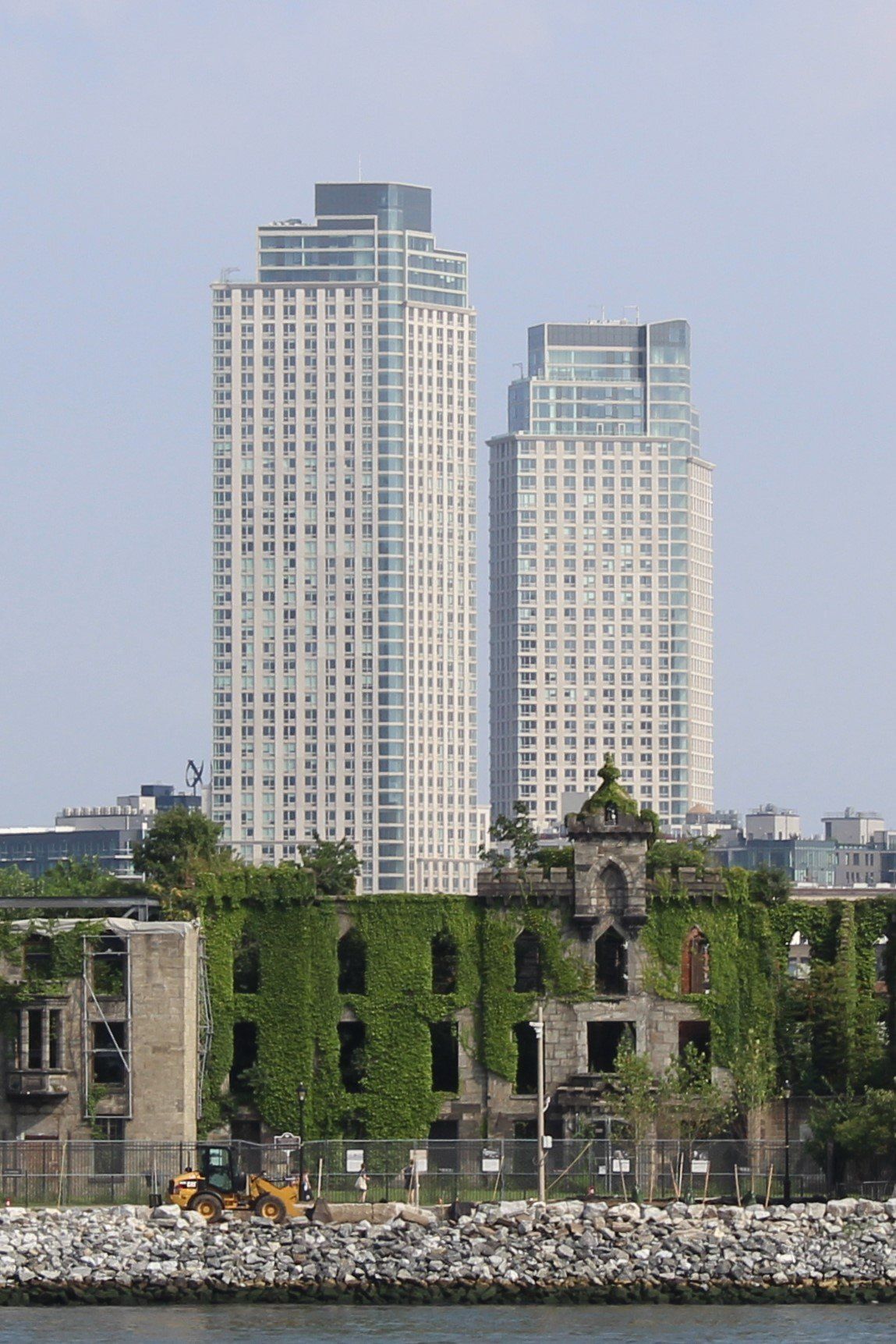
In 2013 Wolkoff decided to demolish the buildings for residential towers. The artists sued under VARA and asked for a preliminary injunction. The court’s written opinion states that Judge Block denied the injunction on 12 November 2013. It records counsel’s 19 November letter reporting that the walls had been painted over the previous evening. The whitewash therefore occurred on the night of 18 November, before the written opinion was filed on 20 November. The later damages ruling found 45 protected works had been destroyed.
What the Visual Artists Rights Act protects
VARA was added to the Copyright Act in 1990 as section 106A. It gives the author of a “work of visual art” three kinds of protection, and the first two are about credit and integrity:
- the right to claim authorship of the work
- the right to prevent intentional distortion, mutilation or other modification that would harm the author’s honor or reputation
- the right to prevent destruction of a work of recognized stature, where intentional or grossly negligent destruction is a violation
Three limits matter for graffiti and murals.
What counts as a work of visual art. The definition in section 101 covers a painting, drawing, print or sculpture (and some photographs made for exhibition). It excludes posters, applied art, advertising and promotional material, merchandising items and work made for hire.
How long and who can waive. For works created after the law took effect, the rights last for the author’s life, and they cannot be transferred. An author can waive them only in a written instrument that names the work and the uses it covers, as section 106A(e) provides.
Buildings and the 90 day notice. Section 113(d) distinguishes work whose removal would damage it from work that can be removed safely. For the first category, consent given before VARA’s effective date is one route; the later route requires a written instrument signed by both the building owner and author, specifying the risk of removal-related damage. When those conditions apply, the rights in section 106A(a)(2) and (3) do not apply, rather than every copyright right disappearing. For safely removable work, those rights continue unless the owner makes an unsuccessful diligent, good-faith attempt to notify the author, or gives written notice and the author fails within 90 days to remove the work or pay for removal.
What the courts decided
The case is Castillo v. G&M Realty L.P., and it has two decisions that matter.
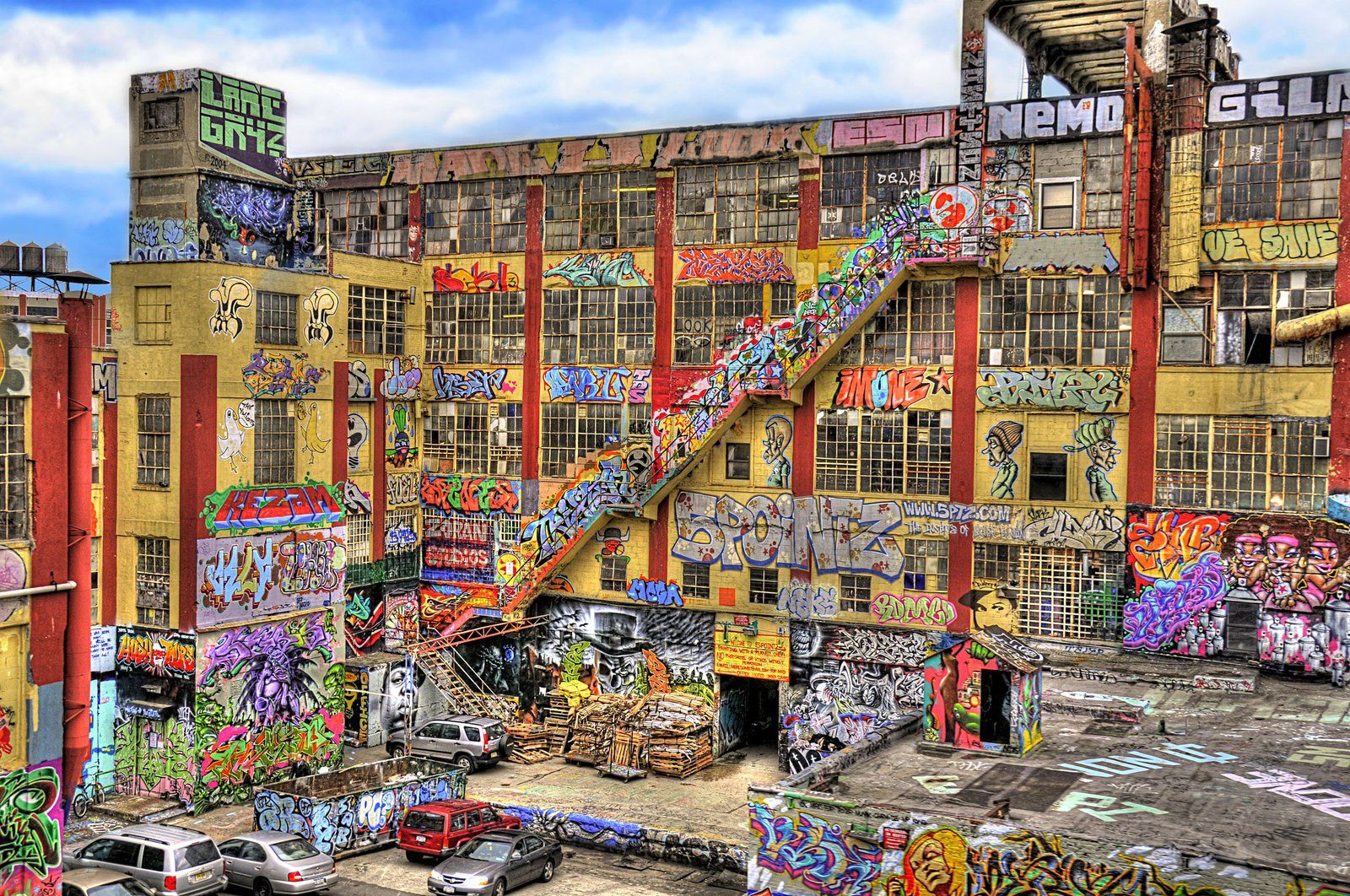
The 2018 trial ruling. The Art Newspaper, in its report on the 5 Pointz judgment, says Judge Block found 45 protected works by 21 artists and awarded $6.75 million, which is $150,000 per work. The report says he found the works met the recognized-stature standard, that he rejected a reading of the standard that would require a masterpiece, and that he found the temporary nature of the works did not remove protection. It quotes him describing the whitewash as “pure pique and revenge.” The law firm post adds that he found the destruction willful and denied post-trial motions on 13 June 2018.
The 2020 appeal. The Second Circuit decided the appeal on 20 February 2020 (amended the next day) and affirmed. Two law firm summaries, Hughes Hubbard and Reed and Legal 500’s republished article, describe the ruling and agree on three points:
- The court held that the statute does not exclude temporary works from recognized stature. It did not draw a line between permanent and temporary art.
- The court accepted the trial judge’s use of expert testimony, the curator’s judgment and the importance of the site in finding recognized stature.
- The court affirmed the willfulness finding and the $6.75 million award. Legal 500 reports that the owner knew of the artists’ VARA claims and had been advised about the 90 day notice provision, and went ahead anyway. The law firm post says the court noted the whitewash had no genuine business need.
The owner asked the Supreme Court to review two questions: whether the “recognized stature” standard has a constitutional defect, and whether the award is grossly excessive. SCOTUSblog’s case page shows the petition was denied on 5 October 2020, so the award stood.
Why the award was so large
Copyright law lets a winning plaintiff choose statutory damages instead of proving a loss. Section 504(c) sets a range of $750 to $30,000 per work, and a court may go up to $150,000 per work if the infringement was willful. The 5Pointz court used the top of that range for each of the 45 works.
The Art Newspaper reports that the plaintiffs could not prove a market value for the works, and that Judge Block reasoned a lower award would make breaking the statute cost-effective. The arithmetic is simple: 45 works times $150,000 is $6.75 million. The award is counted per work.

What it means for graffiti and murals
I paint, and I work in digital marketing in Los Angeles, so I read this case as a marketer and as a painter. The plain lesson is that a court was willing to treat spray-painted work on a warehouse as art with legal weight, and to put a price on destroying it. That is the opposite of how city budgets treat the same look, which I cover in what brand budgets say about graffiti.
Here is what the sources support:
- Graffiti and aerosol murals can fall inside VARA when they meet the definition of a work of visual art and reach recognized stature.
- A work does not have to be permanent to qualify, according to the Second Circuit as summarized by two law firms.
- A curated site, expert testimony and a respected curator helped establish stature in this case.
- An owner who ignores the notice rules and acts willfully can face statutory damages per work.
For the museum side of the same story, see graffiti in museums and galleries.
What the case does not settle
The 5Pointz works were made with the owner’s permission, so the award does not establish protection for every unauthorized work. The 2013 opinion, page 8, footnote 5 cites English v. BFC&R East 11th Street LLC (1997), which denied VARA protection to illegally placed graffiti. That decision concerns the physical-work rights in VARA, not a general right for brands to reproduce a mural. When H&M sued the artist Revok in 2018 to argue his mural had no copyright, it dropped the suit a week later and no court ruled. The broader question is covered in can you copyright graffiti.
It also does not settle several smaller points:
- VARA is about attribution, integrity and destruction. Whether a brand may copy a mural in an ad is a separate question, covered in the posts linked above.
- The definition of a work of visual art excludes advertising and promotional material, and none of the sources says how that applies to a mural used in an ad.
- The statute does not define recognized stature; the court’s legal standard is distinct from whether another particular work meets it.
- A written waiver or consent signed by the artist can change the outcome for a wall.
If you own a wall or paint one, ask a lawyer about the specific facts. This post summarizes rulings and a statute, and does not apply them to anyone’s situation.
Artists mentioned
The artists and estates named in this post, with their own sites and Instagram accounts:
Sources
Retrieved 2026-10-30; primary-law corrections checked 2026-11-01. Where a source is a summary of a court opinion, the text above says so.
-
Cornell Legal Information Institute, 17 U.S.C. 106A, rights of certain authors to attribution and integrity.
-
Cornell Legal Information Institute, 17 U.S.C. 101, definitions (work of visual art).
-
Cornell Legal Information Institute, 17 U.S.C. 113, scope of exclusive rights in pictorial, graphic and sculptural works (subsection d).
-
Cornell Legal Information Institute, 17 U.S.C. 504, remedies for infringement (damages and profits).
-
U.S. Copyright Office, Title 17, chapter 1 (text of section 106A(d), duration of rights).
-
The Art Newspaper, New York judge awards 5Pointz street artists $6.75 million for whitewashed works, 13 February 2018.
-
Leagle, Castillo v. G&M Realty L.P., Nos. 18-498-cv and 18-538-cv (2d Cir.), docket page with dates and caption, decided 20 February 2020, amended 21 February 2020 (opinion text not available on the page).
-
Hughes Hubbard and Reed, Art Law Report, 5Pointz litigation SCOTUS bound, 30 June 2020 (law firm summary).
-
Legal 500, Street art, street smarts: Second Circuit applies VARA, affirms moral rights (law firm article, republished).
-
SCOTUSblog, G&M Realty L.P. v. Castillo, No. 20-66, petition denied 5 October 2020.
-
Wikipedia, 5 Pointz (secondary, for Cohen’s curation from 2002; chronology above follows the court opinion).
-
Grossman LLP, H&M raises, and then drops, a lawsuit, and Hyperallergic, H&M lawsuit against the street artist Revok (for the March 2018 filing and dismissal, as recorded in the research ledger).
-
Image: Ezmosis, View of 5 Pointz, January 20, 2013.jpg, Wikimedia Commons, CC BY-SA 3.0. The artwork shown belongs to its artists; the photo license does not cover it.
-
Image: Percival Kestreltail, 5Pointz Towers LIC.jpg, Wikimedia Commons, CC BY-SA 3.0.
-
Image: iamNigelMorris, 5pointz, Flickr, 8 April 2009, CC BY 2.0. The artwork shown belongs to its artists; the photo license does not cover it.
-
Image: Rebecca Schear, 5Pointz, Flickr, 17 November 2013, CC BY 2.0. The artwork shown belongs to its artists.
-
Image: Stuart McAlpine, 5 Pointz, Flickr, 27 March 2014, CC BY 2.0. The artwork shown belongs to its artists.
-
U.S. District Court, E.D.N.Y., Cohen v. G&M Realty, No. 13-CV-5612, memorandum of 20 November 2013, pages 1 and 2 (injunction and whitewash chronology) and page 8, footnote 5 (English); official GovInfo copy.
Frequently asked questions
What is the Visual Artists Rights Act?
It is a US law, section 106A of the Copyright Act, that gives the author of a work of visual art two rights: to claim authorship, and to prevent intentional distortion or modification that would harm the author's honor or reputation. It also lets the author prevent destruction of a work of recognized stature. For works made after the law took effect, the rights last for the author's life. This is general information, not legal advice.
What happened at 5Pointz?
5Pointz was a group of warehouse buildings in Long Island City, Queens, covered in graffiti and murals that the curator Jonathan Cohen (Meres One) organized from 2002. In 2013 the owner, Gerald Wolkoff, planned to demolish them for residential towers. The artists sued under the Visual Artists Rights Act, a judge refused a preliminary injunction on 12 November 2013, and the owner whitewashed the walls within days.
How much did the 5Pointz artists win?
$6.75 million. In February 2018 Judge Frederic Block awarded $150,000, the statutory maximum for willful infringement, for each of 45 works by 21 artists that he found to have recognized stature. The Second Circuit affirmed the award in February 2020.
Did an appeals court uphold the 5Pointz ruling?
Yes. The Second Circuit affirmed in February 2020, holding among other things that the law does not exclude temporary works from recognized stature. The owner asked the Supreme Court to review the case, and the Court denied the petition on 5 October 2020, which left the award in place.
Does the Visual Artists Rights Act protect graffiti?
In the 5Pointz case it protected 45 graffiti and aerosol works that the owner had allowed on his buildings. The statute covers a painting, drawing, print or sculpture, and excludes advertising, promotional material, applied art and work made for hire. That is not a rule for unauthorized work: English v. BFC&R (1997) denied VARA protection to illegally placed art, as the 2013 5Pointz opinion explains.
What does recognized stature mean?
The statute does not define it. According to legal summaries of the Second Circuit opinion, the court described it as a work of high quality, status or caliber that a relevant community has acknowledged, and said expert testimony and the standing of the site and its curator can help show it.
Can a building owner paint over a mural?
It depends on the work and the paperwork. Section 113(d) has separate rules for safely removable work and work whose removal causes damage. Its post-1991 consent route requires both the owner and artist to sign an instrument specifying the removal-related risk; it affects the rights in section 106A(a)(2) and (3). Safely removable work has a written-notice and 90-day removal route, or a failed diligent, good-faith attempt to notify the artist. A lawyer should answer this for a specific wall.
Why did the 5Pointz award reach $6.75 million?
The judge found the destruction willful, which lets a court award up to $150,000 per work in statutory damages, and he applied the maximum to all 45 works. He reasoned that a smaller award would make breaking the law cost-effective.